







What's Happening?
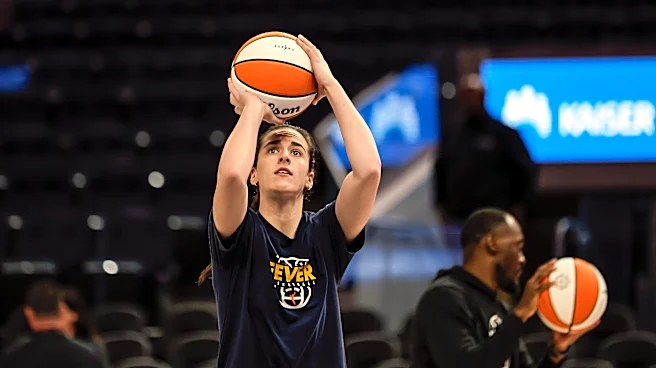
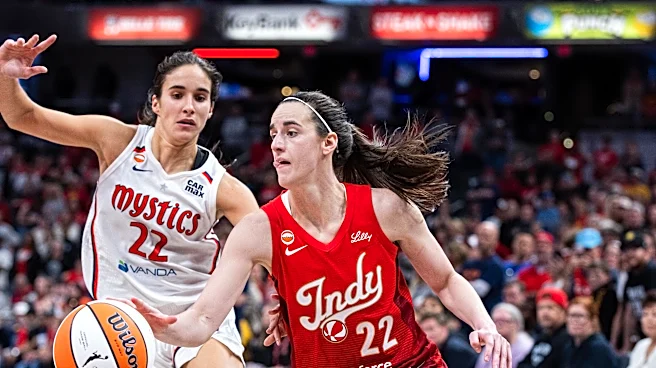
A recent claim by sports media personality Jason Whitlock has stirred controversy in the world of women's basketball. Whitlock posted on social media that the Indiana Fever plans to trade star guard Caitlin Clark to the Los Angeles Sparks, a statement
that quickly went viral, garnering over 2.1 million views. Despite the widespread attention, the claim lacks any credible basis and is seen as an attempt to incite Clark's fan base and capitalize on the attention. Caitlin Clark, known for her focus on the game, has dismissed the rumors, emphasizing that her team does not let such external noise affect their performance or team dynamics.
Why It's Important?
The incident highlights the challenges faced by athletes in the age of social media, where baseless rumors can spread rapidly and impact public perception. For Caitlin Clark and the Indiana Fever, such distractions can potentially disrupt team focus and morale. However, Clark's response underscores the importance of maintaining professionalism and focus amidst external pressures. The situation also reflects broader issues in sports media, where sensationalism can overshadow factual reporting, affecting the credibility of media personalities and outlets.
What's Next?
While Caitlin Clark and the Indiana Fever continue to focus on their performance, the incident may prompt discussions within the sports community about the responsibilities of media figures in reporting and the impact of social media on athletes. It could lead to increased scrutiny of how rumors are handled and the potential need for more robust fact-checking processes before such claims are disseminated.
Beyond the Headlines
This situation sheds light on the ethical considerations in sports journalism, particularly the balance between engaging audiences and maintaining integrity. The incident may also influence how athletes and teams manage their public relations strategies, emphasizing the need for clear communication and support systems to counteract misinformation.