






What's Happening?
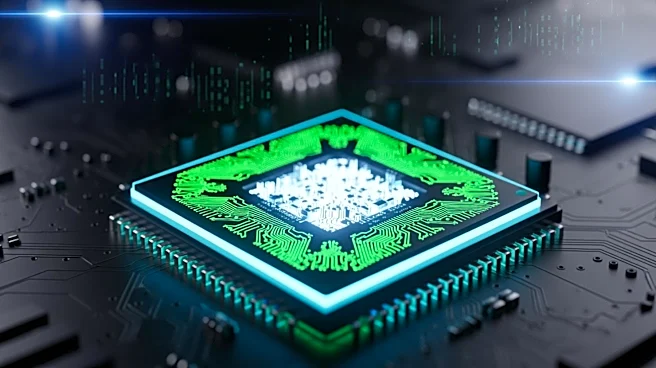
Nvidia has unveiled the RTX Spark superchip, which incorporates the N1X CPU, marking a significant advancement in gaming and computing technology. The chip pairs a MediaTek Arm chiplet with an Nvidia GPU core, creating a new notebook platform designed
for high performance and efficiency. The RTX Spark promises up to 20 Grace CPU cores and 6144 RTX Blackwell GPU cores, along with up to 128 GB of unified LPDDR5x memory. Nvidia aims to offer a range of products that cater to different price points, with configurations ranging from 16 GB to 128 GB of memory. The chip is expected to support popular games like Fortnite, VALORANT, League of Legends, and PUBG, ensuring compatibility with current anti-cheat software.
Why It's Important?
The introduction of the RTX Spark superchip represents a major shift in the gaming and computing landscape, offering enhanced performance and efficiency for gamers and developers. By integrating Arm-based processors, Nvidia is challenging the traditional dominance of x86 processors, potentially leading to changes in industry standards and practices. The chip's ability to support popular games and anti-cheat software is crucial for maintaining a competitive edge in the gaming market. This development is significant for consumers and businesses alike, as it promises improved gaming experiences and new opportunities for innovation in software and applications. Nvidia's strategic partnerships with game developers further underscore the importance of this initiative in shaping the future of gaming technology.
What's Next?
As Nvidia prepares to launch the RTX Spark superchip, the gaming industry will be closely monitoring its impact on performance and compatibility. The success of this new chip could influence future developments in gaming technology, prompting competitors to innovate and adapt. Nvidia's collaboration with game developers suggests a strong commitment to ensuring the chip's market penetration and success. The upcoming release may also lead to new software developments and applications that leverage the chip's capabilities, enhancing gaming experiences and productivity. The broader implications for the industry include potential shifts in market dynamics and increased competition in the gaming and computing sectors.