




What's Happening?
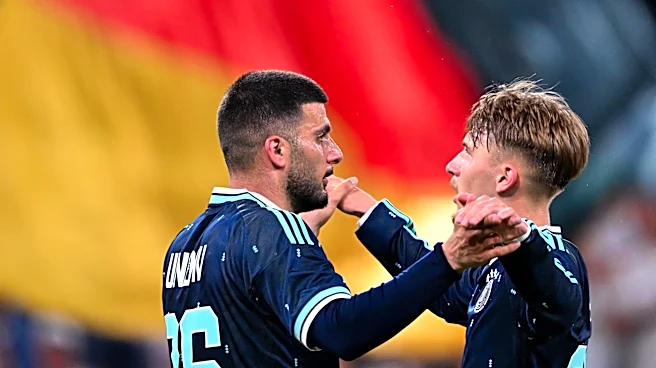
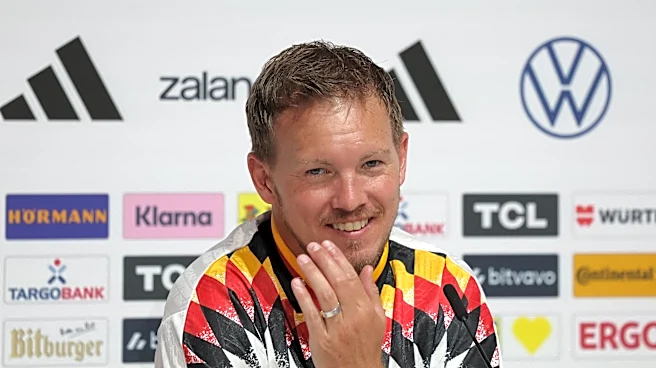
Germany's national football team coach, Julian Nagelsmann, has sparked debate with his decision to include Leroy Sané in the squad for the 2026 World Cup. Sané, who plays for Galatasaray in the Turkish Süper Lig, has been a polarizing figure among fans
and analysts. Despite a mixed performance record, Nagelsmann has shown strong support for Sané, emphasizing his potential and contributions to the team. This decision comes after Sané was previously left out of the national team due to not meeting certain performance expectations. Nagelsmann's recent comments suggest a shift in strategy, as he now highlights Sané's experience and connection with teammates as valuable assets. The upcoming friendly matches against Finland and the USA will be crucial for Sané to secure a starting position, as competition for the right wing spot remains open.
Why It's Important?
Nagelsmann's decision to back Sané is significant as it reflects broader themes in sports management, such as the balance between player potential and performance metrics. This move could influence team dynamics and public perception, especially if Sané performs well in the World Cup. For Germany, a strong showing in the tournament is crucial, given their recent performances in international competitions. The decision also highlights the challenges coaches face in managing public expectations and team morale. Sané's inclusion could either validate Nagelsmann's strategy or lead to further criticism if results do not meet expectations. This situation underscores the complexities of team selection and the impact of leadership decisions on national sports narratives.
What's Next?
The upcoming friendly matches will serve as a testing ground for Sané and other contenders for the right wing position. Nagelsmann is expected to experiment with different attacking combinations to find the optimal lineup for the World Cup. Sané's performance in these matches will be closely watched, as it could determine his role in the tournament. Additionally, the public and media will likely continue to scrutinize Nagelsmann's decisions, especially if the team's performance does not improve. The World Cup itself will be a critical juncture for both Sané and Nagelsmann, as success could solidify their positions, while failure might lead to significant changes in the team's management and strategy.