







What's Happening?
Sam Altman, CEO of OpenAI, has revealed his unique management style, which involves directly messaging 'a few hundred' employees daily through various communication platforms like texts and Slack. Altman, who describes himself as not being a hands-on
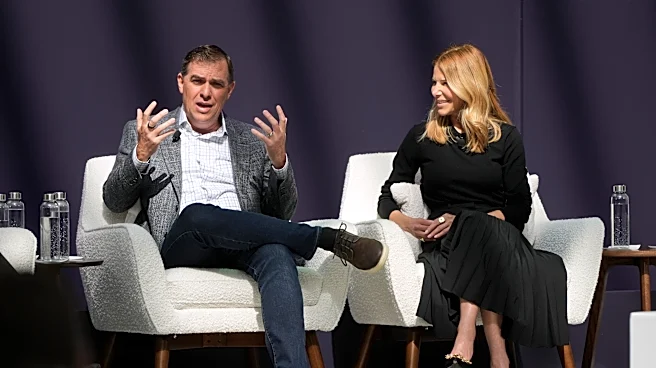
manager, believes this approach provides valuable context and insights. During a conversation with Stripe CEO Patrick Collison, Altman discussed his dislike for Slack but acknowledged its necessity over traditional email communication. He also shared that OpenAI is transitioning into its third phase, moving from a research lab focused on artificial general intelligence (AGI) to developing consumer products and now aiming to become a large-scale token factory. This shift will require a new management approach, and Altman is considering hiring new talent or leveraging AI to manage these changes.
Why It's Important?
Altman's management style and OpenAI's strategic shift have significant implications for the tech industry. By directly engaging with employees, Altman fosters a culture of open communication and rapid feedback, which can enhance innovation and responsiveness. The transition to a large-scale token factory indicates OpenAI's ambition to expand its influence in the tech sector, potentially impacting market dynamics and competition. This move could also influence how other tech companies approach management and organizational change, especially in rapidly evolving fields like AI. The success of this transition could set a precedent for integrating AI into management practices, potentially reshaping leadership models in tech companies.
What's Next?
As OpenAI embarks on this new phase, the company will need to adapt its management and operational strategies to accommodate its expanded focus. Altman may need to recruit new leaders or develop AI tools to manage the complexities of a large-scale token factory. The industry will be watching closely to see how OpenAI navigates this transition and whether it can maintain its innovative edge. Stakeholders, including investors and partners, will likely assess the company's ability to execute this strategy effectively, which could influence future collaborations and investments.