







What's Happening?
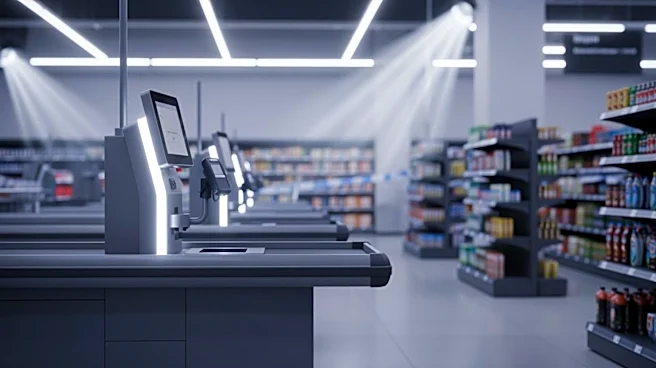
A proposed bill in Rhode Island aims to limit the number of self-checkout kiosks in grocery stores, potentially impacting Aldi's expansion strategy in the U.S. The bill, introduced by Rep. Megan Cotter, seeks to cap self-checkout lanes at a maximum of eight
per store and enforce a staffing ratio of one employee for every two machines. This legislation is part of a broader movement against retail automation, which is seen as a threat to labor. Aldi, which plans to open over 180 new stores in 2026 as part of a $9 billion investment, relies heavily on self-checkout to maintain efficiency and low costs. The bill could force Aldi to reconsider its store design and labor allocation strategies.
Why It's Important?
The proposed legislation in Rhode Island could have significant implications for Aldi and other discount retailers that depend on automation to streamline operations and reduce costs. If passed, the bill could increase operational costs by requiring more staff, potentially affecting Aldi's pricing strategy and competitive edge. This development is crucial as Aldi is in the midst of a major expansion in the U.S., aiming to capture market share from traditional grocers. The bill also reflects a growing regulatory trend that could spread to other states, posing challenges for retailers that have embraced self-checkout technology.
What's Next?
If the Rhode Island bill gains traction, it could set a precedent for similar legislation in other states, including California, Connecticut, Massachusetts, New York, Ohio, and Washington. Aldi and other retailers may need to engage with lawmakers to negotiate terms that balance automation with labor concerns. Additionally, Aldi might explore alternative strategies to maintain its efficiency and cost-effectiveness, such as enhancing digital integration or adjusting store layouts. The outcome of this legislative effort could influence the future of retail automation in the U.S.
Beyond the Headlines
The debate over self-checkout kiosks touches on broader issues of labor rights and the future of work in an increasingly automated economy. While automation can lead to cost savings and efficiency, it also raises concerns about job displacement and fair labor practices. The Rhode Island bill highlights the tension between technological advancement and social responsibility, prompting a reevaluation of how businesses can innovate while supporting their workforce. This situation underscores the need for a balanced approach that considers both economic and social impacts.