






What's Happening?
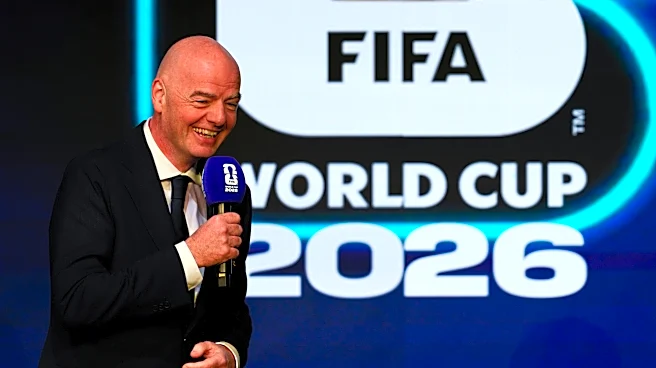
For the first time in FIFA World Cup history, a halftime show will be held during the final match, featuring performances by global music icons Shakira, Madonna, and BTS. The event is scheduled to take place at MetLife Stadium in New Jersey on July 19.
The announcement was made by Coldplay's Chris Martin, with the help of Sesame Street's Elmo, highlighting the significance of the performance. The show aims to raise funds for the FIFA Global Citizen Education Fund, which seeks to expand access to quality education and football for children worldwide. Shakira, known for her previous World Cup anthems, will release the official song for this year's tournament, 'Dai Dai.' Madonna is set to release her new album, 'Confessions II,' on July 3, while BTS is embarking on a world tour following their return from mandatory military service.
Why It's Important?
The inclusion of a halftime show at the World Cup final marks a significant cultural milestone, blending sports and entertainment on a global stage. This event not only enhances the viewing experience for millions of fans but also underscores the growing influence of music in sports events. The participation of artists like Shakira, Madonna, and BTS highlights the global appeal and diverse cultural representation in the World Cup. Additionally, the fundraising aspect of the show aligns with FIFA's commitment to social responsibility, aiming to raise $100 million for educational initiatives. This initiative could have a lasting impact on children's access to education and sports, particularly in underprivileged areas.
What's Next?
As the World Cup approaches, anticipation for the halftime show is expected to build, potentially drawing in a larger audience. The collaboration between FIFA and the artists may set a precedent for future tournaments, integrating entertainment as a staple of the World Cup experience. Stakeholders, including sponsors and broadcasters, may leverage this event to enhance their engagement strategies. The success of this initiative could influence other major sporting events to adopt similar entertainment-driven approaches, further blurring the lines between sports and entertainment.