








What's Happening?
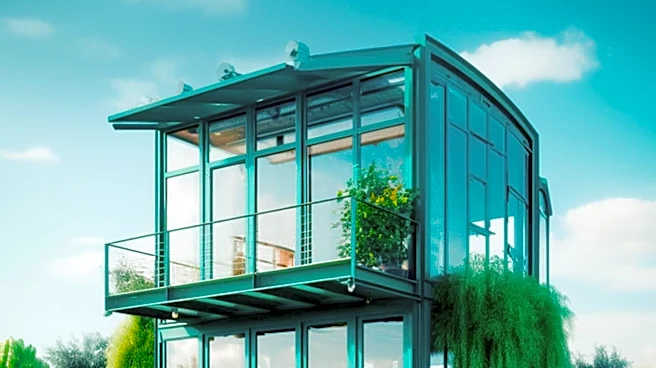
Desai Chia Architecture, a New York-based firm, has designed a unique residential project on Shelter Island, New York, known as the Osprey House. This home is strategically positioned on a waterfront property adjacent to a nature preserve, offering expansive
views of the surrounding marshland and wildlife. The design incorporates large communal living spaces and an outdoor terrace on the second floor, inspired by the elevated perches of osprey nests. The house features vertical cypress siding, which helps it blend into the natural environment and encourages wildlife habitation. The architectural design also includes a south-facing clerestory window that allows sunlight to illuminate the living spaces throughout the day. The project reflects the firm's commitment to connecting architecture with nature and creating spaces that foster community and interaction with the environment.
Why It's Important?
The Osprey House project by Desai Chia Architecture highlights a growing trend in residential architecture that emphasizes sustainability and integration with natural surroundings. By designing homes that blend seamlessly with their environment, architects can reduce the ecological footprint of new constructions and promote biodiversity. This approach not only benefits the environment but also enhances the living experience for residents by providing them with a closer connection to nature. The project serves as a model for future residential developments, particularly in ecologically sensitive areas, demonstrating how architecture can harmonize with the landscape rather than disrupt it. This trend is significant as it aligns with broader societal shifts towards sustainability and environmental responsibility.
What's Next?
Desai Chia Architecture plans to expand its portfolio with new residential projects in Michigan, Colorado, upstate New York, and Costa Rica. The firm is also venturing into cultural and institutional projects, including collaborations with museums and universities. These projects aim to create spaces that foster community and collaboration, applying the principles of residential design to broader contexts. This expansion reflects a growing interest in creating multifunctional spaces that serve both private and public needs, potentially influencing future architectural trends in both residential and institutional sectors.
Beyond the Headlines
The design of the Osprey House raises important considerations about the role of architecture in environmental conservation. By integrating homes into their natural surroundings, architects can play a crucial role in preserving local ecosystems and promoting biodiversity. This approach also challenges traditional architectural practices that often prioritize human needs over environmental considerations. As more architects adopt sustainable design principles, there could be a significant shift in how residential spaces are conceived and constructed, leading to more environmentally friendly and aesthetically pleasing living environments.