

What's Happening?
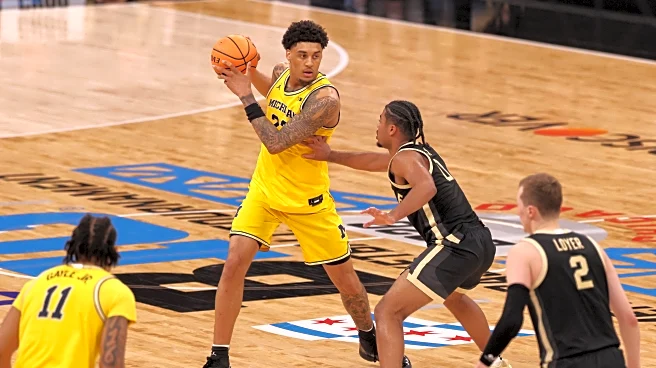
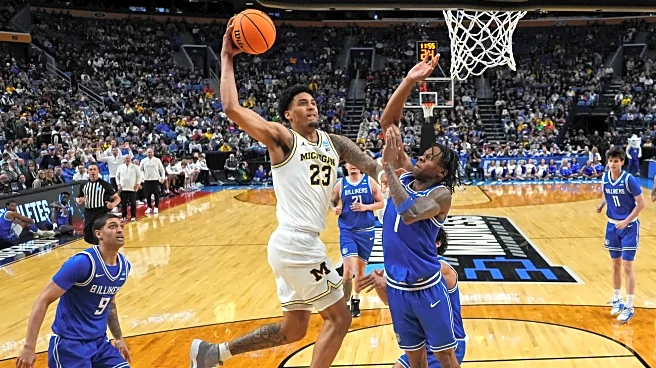
The Michigan Wolverines basketball team has been reported as one of the highest spenders in college basketball for the 2025-26 season, with a budget of at least $10 million. This information was revealed in a report by On3's Pete Nakos, which detailed
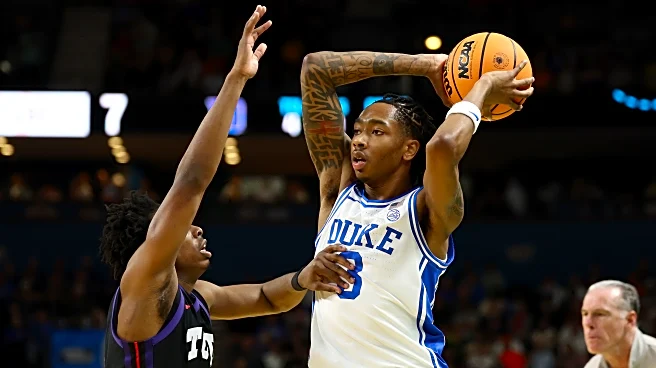
the spending of various NCAA Tournament teams. The Wolverines, led by head coach Dusty May, have invested significantly in their roster, including acquiring UAB transfer and Big Ten Player of the Year Yaxel Lendeborg. Despite rumors suggesting that Michigan spent excessively compared to other Big Ten teams, the report clarifies that these claims are false. Other teams in the Sweet 16, such as Arkansas, Duke, and Houston, also reported similar spending levels. Notably, Kentucky, which is no longer in the tournament, spent $22 million on its roster.
Why It's Important?
The substantial investment by the Michigan Wolverines highlights the increasing financial stakes in college basketball, particularly with the advent of Name, Image, and Likeness (NIL) deals. This trend reflects a broader shift in college sports, where financial resources can significantly impact team competitiveness and recruitment strategies. The Wolverines' spending underscores the importance of financial backing in assembling a competitive team, potentially influencing the dynamics of college basketball. As more programs increase their budgets, the gap between well-funded teams and others may widen, affecting the overall landscape of college sports. This development also raises questions about the sustainability and ethical implications of such high spending in amateur athletics.
What's Next?
Looking ahead, the trend of high spending in college basketball is expected to continue, with projections indicating that top programs may increase their budgets to $12 to $15 million in the coming seasons. This escalation could prompt discussions among NCAA officials, university administrators, and stakeholders about the need for regulations or guidelines to ensure fair competition. Additionally, the transparency of financial dealings in college sports may come under scrutiny, as suggested by head coach Dusty May's comments about the potential involvement of the IRS in auditing program budgets. The outcomes of these discussions could shape the future of college basketball, influencing recruitment practices and the distribution of resources across programs.