






What's Happening?
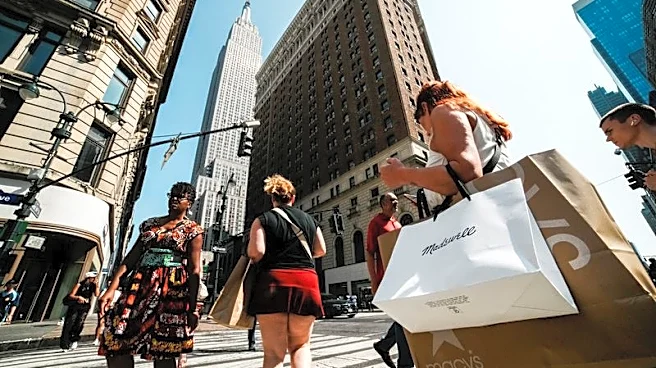
In April, U.S. retail sales increased by 0.5%, marking the third consecutive month of growth. However, this growth is slower compared to the 1.6% rise in March. The increase in sales is primarily driven by higher gas prices, which have forced consumers
to adjust their spending habits. While sales at gas stations rose by 2.8%, other sectors such as furniture and car dealerships experienced declines. The ongoing conflict in the Middle East has contributed to the surge in energy prices, affecting consumer sentiment and spending patterns. Despite these challenges, the labor market remains strong, with unemployment holding steady at 4.3% and employers adding 115,000 jobs in April.
Why It's Important?
The persistent rise in gas prices poses a significant challenge to the U.S. economy, as it affects consumer spending, a key driver of economic growth. The conflict in the Middle East has led to increased energy costs, impacting household budgets and consumer confidence. While the labor market remains robust, the high gas prices could lead to a shift in consumer spending, with potential negative effects on sectors reliant on discretionary spending. The situation underscores the interconnectedness of global events and domestic economic conditions, highlighting the need for strategic economic policies to address these challenges.
What's Next?
As gas prices continue to rise, consumers may further alter their spending habits, potentially impacting various sectors of the economy. The Federal Reserve and policymakers will need to monitor the situation closely and consider interventions to stabilize the economy. Businesses may also need to adapt to changing consumer preferences and economic conditions. The ongoing geopolitical tensions in the Middle East will remain a critical factor influencing energy prices and, consequently, the broader economic landscape.