









What's Happening?
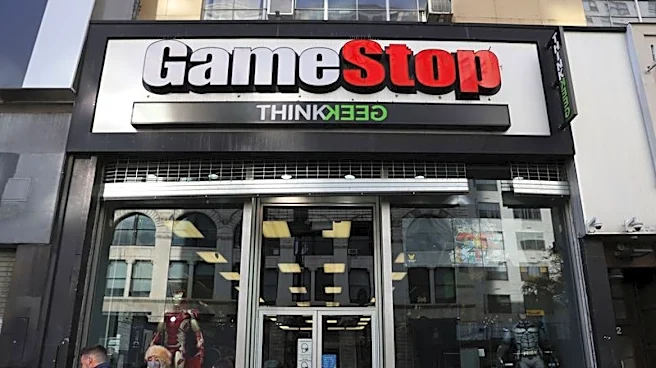
GameStop, under the leadership of CEO Ryan Cohen, is reportedly planning to acquire eBay, a digital marketplace with a market value over four times that of GameStop. This move is part of Cohen's strategy to transform GameStop into a '$100-billion plus
juggernaut,' as reported by the Wall Street Journal. The news has led to a rise in the stock prices of both companies. GameStop, which has faced financial challenges and closed over 400 U.S. locations this year, reported net sales of $3.6 billion in 2025, a decrease from the previous year. Despite these challenges, the company achieved an operating income of $232.1 million, marking a recovery from previous losses. Cohen's plan to acquire a larger company is seen as a bold move that could either significantly benefit or harm GameStop.
Why It's Important?
The potential acquisition of eBay by GameStop could significantly alter the landscape of the retail and e-commerce sectors. If successful, this move could provide GameStop with a substantial online presence and diversify its offerings beyond video games. This could help the company mitigate the impact of declining physical store sales and adapt to changing consumer behaviors. For eBay, being acquired by GameStop could lead to strategic shifts and potential restructuring. The acquisition could also influence investor confidence and market dynamics, as it represents a significant consolidation in the retail industry. Stakeholders, including employees and shareholders of both companies, stand to be affected by the outcome of this ambitious plan.
What's Next?
The specifics of GameStop's offer for eBay remain unclear, and the success of this acquisition will depend on various factors, including regulatory approvals and shareholder responses. If the acquisition proceeds, it could lead to significant changes in both companies' operations and strategies. Stakeholders will be closely monitoring developments, and any official announcements or negotiations will likely impact stock prices and market perceptions. Additionally, the broader retail and e-commerce sectors may react to this potential consolidation, influencing competitive strategies and market positioning.