
What's Happening?
Paul Skenes, the ace pitcher for the Pittsburgh Pirates, has publicly changed his stance on Major League Baseball's Automated Ball-Strike (ABS) system. Initially skeptical, Skenes now supports the system after experiencing questionable calls against him
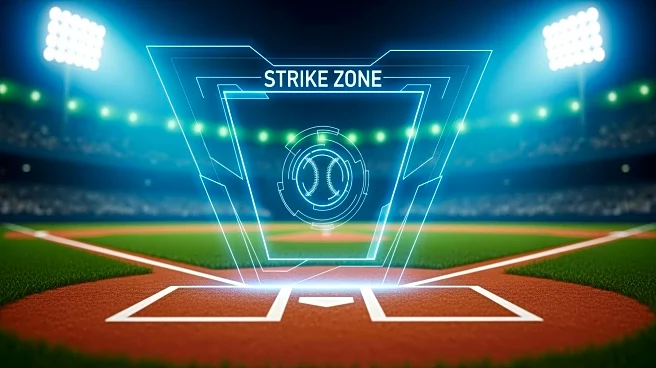
last season. During an appearance on the Pat McAfee Show, Skenes explained that he had more pitches in the zone called as balls than actual balls called as strikes, prompting his shift in opinion. The ABS system, which allows batters, pitchers, and catchers to challenge balls and strikes, has been implemented in regular-season games for the first time this year. Teams are allowed at least two challenges per game, and successful challenges allow teams to retain their challenge rights. According to Baseball Savant, 55% of challenges have resulted in overturned calls, with pitchers and catchers having a higher success rate than batters. Skenes, who has established himself as a top pitcher, plans to leave challenge decisions to his catchers.
Why It's Important?
The adoption of the ABS system marks a significant shift in how baseball games are officiated, potentially improving accuracy and fairness in calls. For players like Skenes, who have been affected by incorrect calls, the system offers a chance to rectify errors and maintain performance integrity. The system's success rate suggests it could lead to more accurate outcomes in games, impacting team strategies and player statistics. As a prominent figure in MLB, Skenes' endorsement of the ABS system could influence other players and teams to embrace the technology, potentially leading to widespread acceptance and integration in the sport. This development may also affect how umpires are trained and evaluated, as technology plays a larger role in officiating.
What's Next?
As the ABS system continues to be used in regular-season games, its effectiveness and impact on game dynamics will be closely monitored. Teams may adjust their strategies based on the success rates of challenges, potentially altering how games are played and managed. The system's implementation could lead to further technological advancements in sports officiating, with other leagues considering similar approaches. MLB may also evaluate the system's performance and make adjustments to improve its accuracy and efficiency. Players and teams will likely continue to adapt to the new system, influencing training and game preparation.