




What's Happening?
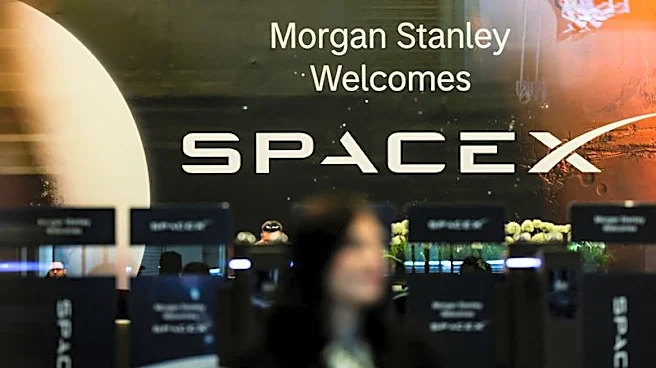
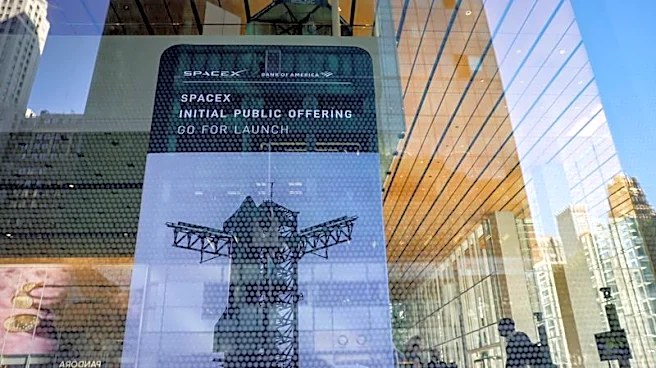
Jamie Dimon, CEO of JPMorgan Chase, is actively promoting the upcoming SpaceX IPO, which is anticipated to be one of the largest in Wall Street history. SpaceX, led by Elon Musk, aims to raise $75 billion at a valuation of $1.75 trillion, positioning
it among the top 10 most valuable U.S. companies. The IPO is expected to generate significant underwriting fees, with 23 banks, including Goldman Sachs and Morgan Stanley, participating. Dimon is leveraging JPMorgan's extensive branch network to attract high-net-worth clients and retail investors. The IPO's unconventional approach, with a pre-set share price of $135, adds pressure on Wall Street to secure buyers.
Why It's Important?
The SpaceX IPO is a landmark event for Wall Street, reflecting the growing influence of technology and space exploration companies in the financial markets. The involvement of major banks and the scale of the offering highlight the potential for significant financial gains. However, the high valuation and unconventional IPO process raise concerns about market stability, especially amidst fears of an AI bubble. The success of this IPO could set a precedent for future offerings, influencing how companies approach public listings. For investors, the IPO presents both opportunities and risks, given SpaceX's ambitious goals and the current market environment.
What's Next?
As the SpaceX IPO approaches, market participants will closely monitor investor interest and the offering's impact on market dynamics. The success of the IPO could encourage other tech and space companies to pursue public listings, potentially leading to increased market activity. However, if the offering struggles to attract buyers, it could signal caution to other companies considering IPOs. The outcome may also influence regulatory scrutiny and investor sentiment towards high-valuation tech companies. Stakeholders will be keen to see how SpaceX's performance post-IPO aligns with its valuation and growth projections.