


What's Happening?
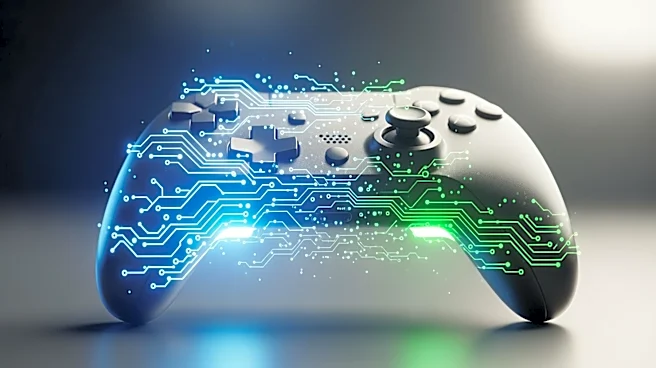
Unity AI, a suite of AI-powered game development tools, is designed to automate tasks and generate assets, significantly aiding creators in the game development process. These tools are part of Unity's real-time 3D (RT3D) software, which aims to streamline
workflows and enhance productivity for developers. The tools include features that allow for the automation of repetitive tasks, asset generation, and improved iteration speed, thereby enabling developers to focus more on creative aspects. The integration of AI into Unity's development environment is intended to support developers in overcoming everyday challenges while maintaining control over the creative process.
Why It's Important?
The introduction of AI tools in Unity's development suite represents a significant advancement in game development technology. By automating routine tasks and facilitating faster iteration, these tools can reduce development time and costs, making game creation more accessible to smaller studios and independent developers. This democratization of game development tools can lead to a more diverse range of games being produced, as developers can allocate more resources to innovation and creativity. Additionally, the efficiency gains from AI integration can enhance the competitiveness of U.S. game developers in the global market, potentially leading to economic growth within the industry.
What's Next?
As Unity continues to develop and refine its AI tools, developers can expect further enhancements in automation and asset generation capabilities. The ongoing evolution of these tools may lead to new features that address more complex development challenges, such as advanced AI-driven character behaviors and dynamic environment generation. Developers and studios will likely need to adapt to these changes by updating their workflows and skill sets to fully leverage the benefits of AI in game development. Furthermore, the industry may see increased collaboration between AI researchers and game developers to push the boundaries of what is possible in interactive entertainment.
Beyond the Headlines
The integration of AI into game development raises important questions about the future of creativity and employment in the industry. While AI tools can enhance efficiency, there is a potential risk of reducing the demand for certain roles traditionally filled by human developers, such as asset creation and level design. This shift may necessitate a reevaluation of skill sets within the industry, with a greater emphasis on AI literacy and creative problem-solving. Additionally, ethical considerations regarding the use of AI in creative processes may emerge, prompting discussions about the balance between human creativity and machine assistance.