
What's Happening?
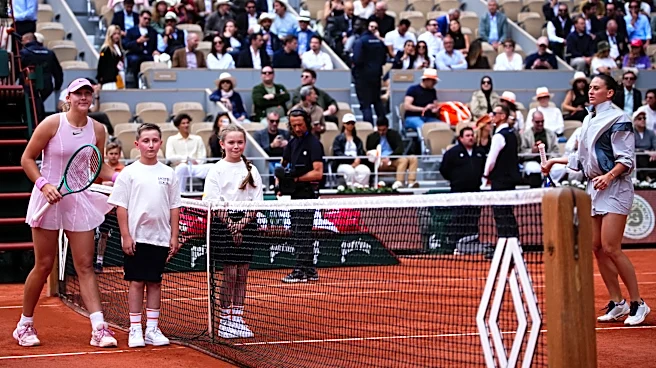
Mirra Andreeva, a 19-year-old Russian tennis player, has won her first Grand Slam title at the French Open, defeating Polish qualifier Maja Chwalinska with a score of 6-3, 6-2. Andreeva, who burst onto
the tennis scene at 15, has been recognized for her strong baseline game. However, her journey to the top has been marked by overcoming significant mental challenges. Her coach, Conchita Martinez, noted Andreeva's stubbornness as a hurdle, but praised her potential when she is focused and receptive. During the trophy ceremony, Andreeva expressed gratitude to her psychologist and acknowledged the internal struggles she faced. Chwalinska, who has battled depression, was attempting to become the first qualifier to win the Roland Garros title. The match was played under windy conditions, which Andreeva managed better than her opponent, allowing her to dominate the game.
Why It's Important?
Andreeva's victory is significant as it highlights the mental resilience required in professional sports, particularly in tennis, which is known for its individual pressures. Her win at such a young age positions her as a rising star in women's tennis, potentially influencing the dynamics of future tournaments. The match also underscores the importance of mental health support for athletes, as both Andreeva and Chwalinska have faced psychological challenges. This victory could inspire other young athletes facing similar struggles, emphasizing the role of mental fortitude in achieving success. Additionally, Andreeva's win without her country's flag, due to the ongoing conflict involving Russia, reflects the broader geopolitical tensions impacting sports.
What's Next?
Following her Grand Slam victory, Andreeva is likely to gain increased attention and sponsorship opportunities, which could further her career. Her performance may also lead to higher expectations in upcoming tournaments, where she will be watched closely by both fans and competitors. The tennis community will be interested in how she handles this new level of pressure and whether she can maintain her form. For Chwalinska, the focus may shift to her mental health journey and how she continues to manage her career alongside personal challenges. The broader tennis world may see increased discussions around mental health support for players, potentially leading to more resources and initiatives in this area.
Beyond the Headlines
Andreeva's triumph at the French Open also brings attention to the challenges faced by young athletes in high-pressure environments. Her acknowledgment of internal 'demons' and the role of her psychologist highlights the often-overlooked mental health aspects of sports. This victory could prompt a cultural shift in how mental health is perceived and addressed in the sports industry, encouraging more open conversations and support systems. Additionally, the geopolitical context of her win, with the absence of her national flag, may influence how international sports events are conducted amid global conflicts, potentially affecting athlete participation and representation.