
What's Happening?
The Federal Reserve is currently experiencing significant internal disagreement regarding its interest rate policy. At a recent meeting, the Fed decided to keep the federal funds rate steady within a range
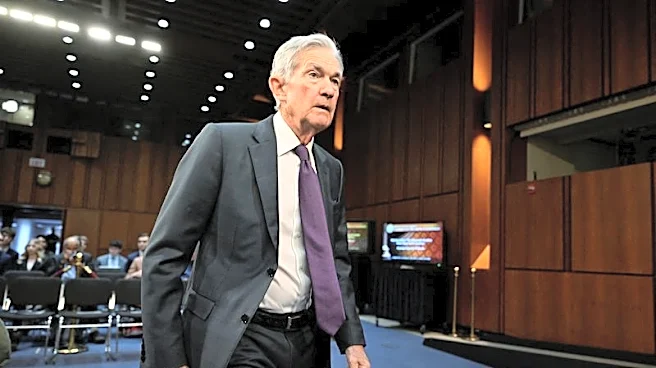
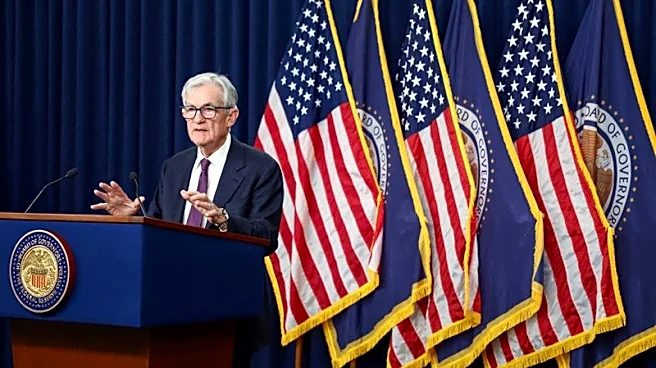
of 3.50% to 3.75%. However, the ongoing US-Israeli conflict with Iran and rising oil prices have disrupted the central bank's policy assumptions. Fed Chair Jerome Powell noted that while these pressures have not yet altered the long-term inflation outlook, they are likely to persist. Within the Federal Open Market Committee (FOMC), there is a growing divide, with some members opposing any indication of a bias towards cutting rates. This internal conflict is further complicated by Powell's decision to remain as a Fed governor even after his term as chairman ends, adding to the tense political environment at the Fed.
Why It's Important?
The internal disagreements within the Federal Reserve are crucial as they could influence the broader U.S. economy and financial markets. The Fed's decisions on interest rates directly affect borrowing costs for consumers and businesses, impacting economic growth and inflation. The current economic pressures, including elevated oil prices and geopolitical tensions, add complexity to the Fed's policy decisions. Investors and market participants are closely watching these developments, as any shift in the Fed's stance could lead to volatility in bond markets and affect credit conditions. The Fed's ability to navigate these challenges will be critical in maintaining economic stability and managing inflation expectations.
What's Next?
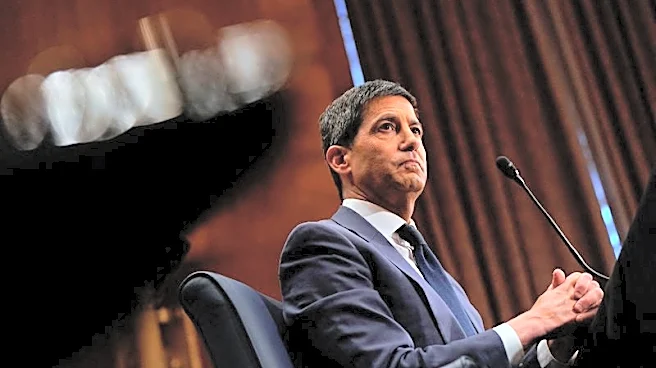
As the Federal Reserve grapples with internal disagreements and external economic pressures, the next steps will likely involve careful monitoring of economic indicators and geopolitical developments. The potential confirmation of a new Fed chair, Kevin Warsh, could also influence the Fed's future policy direction. Market participants will be attentive to any changes in the Fed's communication style or policy signals, as these could impact treasury yields, credit spreads, and overall market sentiment. The Fed's ability to balance its dual mandate of maximum employment and stable inflation will be tested in the coming months.