


What's Happening?
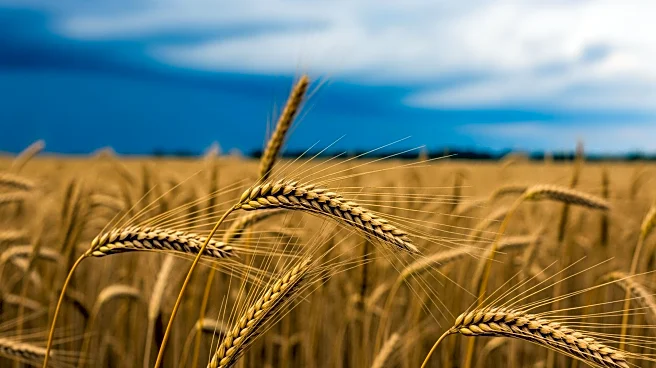
The United States Department of Agriculture (USDA) has projected a slight improvement in the agricultural economy by 2026. According to USDA Chief Economist Justin Benavidez, prices for major commodities such as corn, soybeans, and wheat are expected to rise modestly, with an anticipated increase of 10 cents per bushel. Cotton prices could also see a rise of 3 cents per pound. This forecast was presented at the USDA’s Agricultural Outlook Forum in Arlington, Virginia. The USDA also expects production costs to moderate for the first time in several years, with inflation-adjusted costs of seed, fertilizer, and chemicals projected to fall by 0.9%. Despite these positive indicators, the USDA acknowledges that not all farmers will experience lower
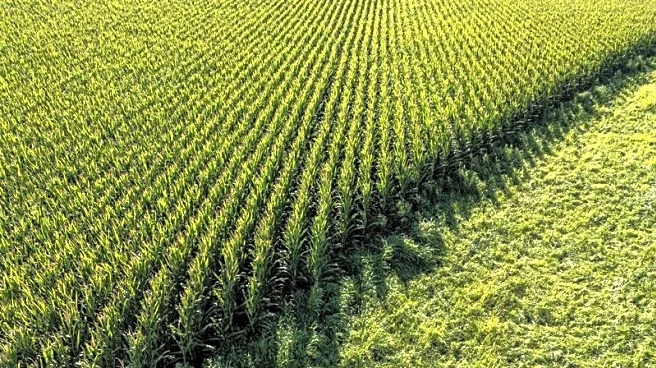
costs, as some may still see nominal cost increases. The USDA also forecasts changes in planting patterns, with an increase in soybean acreage and a decrease in corn acreage due to stronger profitability and crop rotations.
Why It's Important?
The USDA's projections are significant as they suggest a potential easing of financial pressures on U.S. farmers, who have faced rising production costs in recent years. The anticipated increase in commodity prices could provide some relief to farmers, improving their profitability. Additionally, the moderation of production costs could help stabilize the agricultural sector, which is crucial for the U.S. economy. The shift in planting patterns, with more soybeans and less corn, reflects changing market dynamics and could impact supply chains and export markets. The projected increase in soybean exports, driven by revived demand from China, highlights the importance of international trade relations for U.S. agriculture.
What's Next?
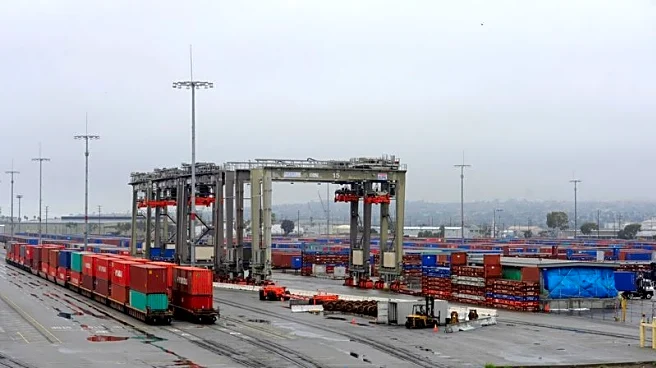
Looking ahead, the USDA's projections suggest that U.S. farmers may need to adapt to changing market conditions, including increased competition from South American suppliers. The anticipated rise in soybean exports could strengthen trade ties with China, while the decrease in corn exports may require farmers to explore new markets. The USDA's focus on closing the gap between production costs and prices received for crops indicates a need for continued efforts to enhance demand and improve market conditions. Policymakers and industry stakeholders may need to consider strategies to support farmers in navigating these changes and ensuring the long-term sustainability of the agricultural sector.