
What's Happening?
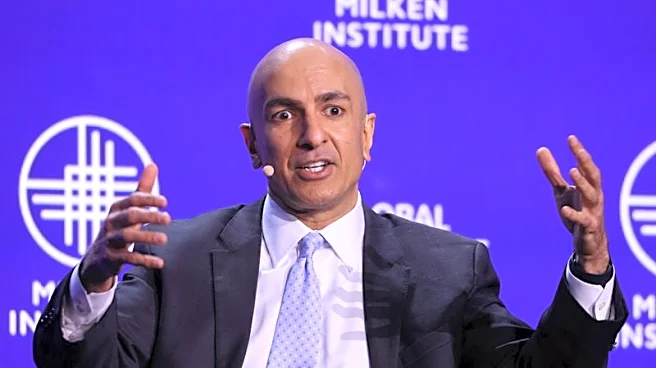
Federal Reserve Bank of Minneapolis President Neel Kashkari has expressed concerns that the ongoing conflict between the U.S. and Iran is increasing inflation risks, complicating the Federal Reserve's
ability to provide clear guidance on interest rate policy. The conflict, which began with airstrikes by the U.S. and Israel on Iran, has led to a significant rise in energy prices, intensifying inflation pressures in the U.S. Despite the Federal Reserve maintaining its interest rate target range at 3.5% to 3.75%, Kashkari and other officials have dissented, suggesting that the Fed might need to raise rates instead of cutting them. The closure of the Strait of Hormuz, a critical passage for global oil and gas supplies, has further exacerbated the situation.
Why It's Important?
The ongoing conflict and its impact on energy prices pose a significant challenge to the U.S. economy, potentially leading to higher inflation. This situation complicates the Federal Reserve's monetary policy decisions, as it must balance the need to control inflation with the potential negative impact of higher interest rates on economic growth. The uncertainty surrounding the conflict and its economic implications could lead to volatility in financial markets and affect consumer and business confidence. Stakeholders such as businesses, investors, and policymakers are closely monitoring the situation, as any changes in interest rates could have widespread economic consequences.
What's Next?
The Federal Reserve will continue to assess the economic impact of the Iran conflict and its implications for inflation and interest rates. Future decisions on interest rates will likely depend on the conflict's progression and its effects on global energy markets. Market participants and policymakers will be watching for any signs of resolution or escalation in the conflict, as these developments will influence the Fed's policy direction. Additionally, the Fed's communication and guidance will be crucial in managing market expectations and maintaining economic stability.