






What's Happening?
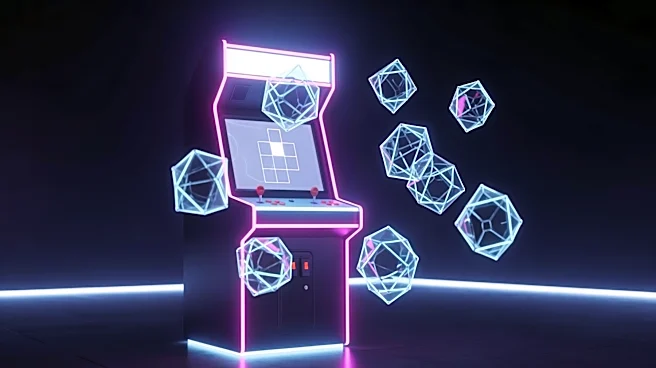
Squingle Arcade, a new mixed reality and virtual reality puzzle game, has opened its first public playtest from April 16 to April 26. Developed as an evolution of the original Squingle, this game challenges players to guide orbs of light through complex
three-dimensional mazes, collecting baubles and avoiding obstacles. The game features a psychedelic aesthetic, with vibrant colors and dynamic environments that change in real-time. Influenced by games like Tetris Effect and Kururin, Squingle Arcade offers a unique experience with time attack modes, leaderboards, and accolades for quick puzzle completion. The playtest is available on Quest 3/3S, with future support for Meta Quest devices and SteamVR.
Why It's Important?
The public playtest of Squingle Arcade represents a significant step in the evolution of MR/VR gaming, offering players a chance to experience innovative gameplay mechanics and aesthetics. This event allows developers to gather valuable feedback from users, which can be used to refine the game before its official release. The game's unique approach to puzzle-solving in a mixed reality environment could attract a broader audience to MR/VR gaming, potentially influencing future game development trends. Additionally, the playtest provides an opportunity for players to engage with cutting-edge technology, enhancing their understanding and appreciation of MR/VR capabilities.
What's Next?
Following the public playtest, developers will likely analyze player feedback to make necessary adjustments to Squingle Arcade. The game is expected to release on Meta's Horizon Store, expanding its availability to a wider audience. As the MR/VR gaming industry continues to grow, Squingle Arcade could inspire other developers to explore similar innovative concepts, potentially leading to more diverse and engaging gaming experiences. The success of this playtest could also encourage further investment in MR/VR technology, driving advancements in hardware and software capabilities.
Beyond the Headlines
Squingle Arcade's unique visual and gameplay elements highlight the potential for MR/VR games to offer immersive experiences that transcend traditional gaming boundaries. The game's psychedelic aesthetic and dynamic environments may prompt discussions about the role of art and design in enhancing virtual experiences. Additionally, the integration of real-time environmental changes in mixed reality settings could pave the way for new applications in fields such as education and training, where immersive simulations can provide valuable learning opportunities.