






What's Happening?
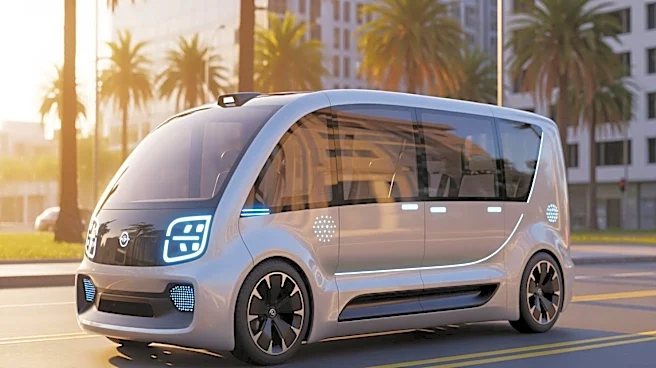
Volkswagen subsidiary MOIA America and Uber have initiated testing of autonomous microbuses in Los Angeles, marking a significant step towards launching a robotaxi service by late 2026. This initiative follows a plan announced last year to deploy Volkswagen's
electric ID. Buzz minivans in multiple U.S. cities. The testing phase will begin with approximately 10 autonomous vehicles, with plans to expand the fleet to over 100. Initially, these vehicles will operate with a human safety operator on board, with fully driverless operations expected to commence in 2027. The project reflects Volkswagen's strategy to integrate autonomous mobility into real-world applications, leveraging its experience from European markets.
Why It's Important?
The testing of autonomous microbuses in Los Angeles represents a pivotal development in the evolution of urban transportation. By integrating autonomous vehicles into public transport systems, companies like Volkswagen and Uber aim to enhance mobility solutions, reduce traffic congestion, and lower emissions. This initiative could significantly impact the ride-hailing industry, offering a glimpse into the future of urban commuting. The success of this project could lead to widespread adoption of autonomous vehicles, influencing public policy and regulatory frameworks. Stakeholders in the automotive and tech industries stand to benefit from advancements in autonomous technology and its potential to reshape transportation infrastructure.
What's Next?
As Volkswagen and Uber progress with their testing, they will need to navigate regulatory hurdles, including obtaining permits from the California Department of Motor Vehicles and the California Public Utilities Commission. The companies will also focus on scaling their operations and refining the technology to ensure safety and efficiency. The outcome of these tests could influence future deployments in other U.S. cities and potentially set a precedent for similar initiatives globally. Stakeholders, including city planners and policymakers, will closely monitor the project's impact on urban mobility and infrastructure.