






What's Happening?
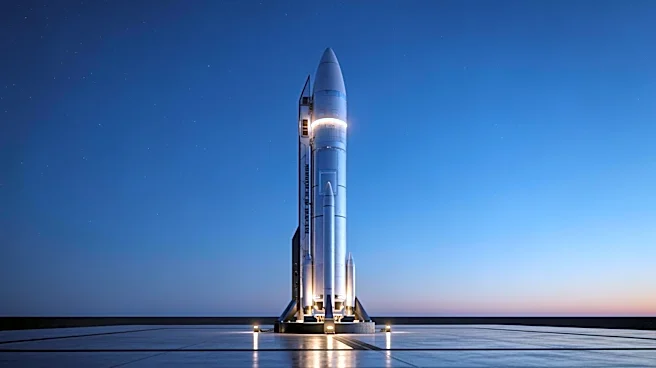
SpaceX has scheduled the debut launch of its upgraded Starship V3 megarocket for May 19. This launch will take place from SpaceX's Starbase facility in South Texas, with a 90-minute window starting at 6:30 p.m. EDT. The Starship V3 represents the latest
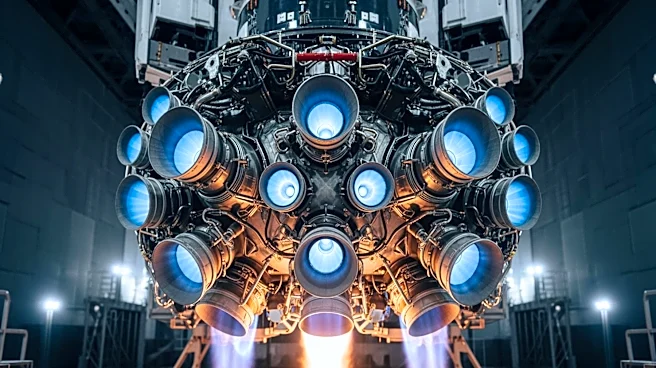
and most advanced version of SpaceX's deep-space vehicle, featuring significant design upgrades aimed at improving performance and reusability. This mission marks the 12th overall test flight of the Starship, but the first using the new Version 3 configuration. Key upgrades include larger and stronger grid fins on the Super Heavy booster, a redesigned hot-stage section, and a 'clean-sheet redesign' of the Ship upper stage's propulsion system. These enhancements are intended to support future long-duration missions to the Moon and Mars, aligning with SpaceX's ambitions for lunar exploration and human missions to Mars.
Why It's Important?
The launch of the Starship V3 is a significant milestone for SpaceX as it continues to push the boundaries of space exploration technology. The upgrades in the V3 model, such as improved reusability and enhanced propulsion systems, are crucial for reducing the cost and increasing the feasibility of long-duration space missions. This development is particularly important for the U.S. space industry, as it strengthens SpaceX's position as a leader in commercial spaceflight and supports NASA's goals for lunar and Martian exploration. The success of this launch could accelerate the timeline for human missions to Mars, potentially opening new opportunities for scientific research and international collaboration in space.
What's Next?
Following the debut launch of the Starship V3, SpaceX will likely conduct further tests to validate the performance of the new design features. Successful tests could lead to more frequent and ambitious missions, including potential collaborations with NASA and other international space agencies. The advancements in the Starship V3 may also influence the broader space industry, prompting other companies to innovate and compete in the realm of deep-space exploration. Additionally, SpaceX's progress could impact public policy and funding decisions related to space exploration, as government agencies assess the potential for commercial partnerships in achieving national space objectives.