




What's Happening?
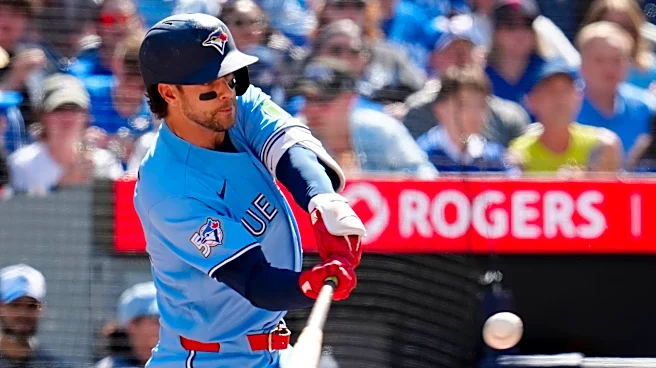
The Baltimore Orioles expressed strong discontent following a controversial base-running call during their 6-4 loss to the Toronto Blue Jays. The incident occurred in the sixth inning when Ernie Clement reached base on a fielding error, placing runners
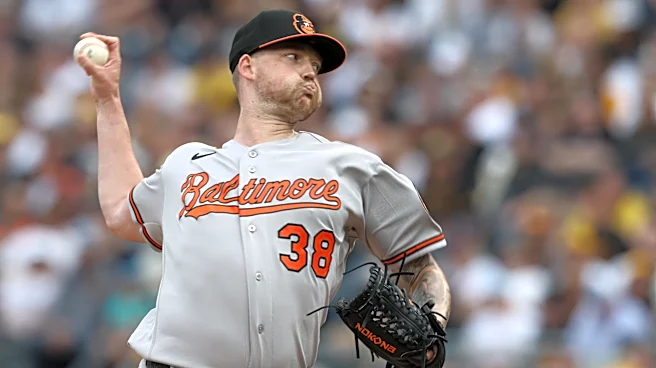
on the corners. A subsequent play by Brandon Valenzuela led to confusion as Orioles believed Clement had run out of the basepath and should be called out. However, second-base umpire Nic Lentz ruled Clement safe, asserting that the runner altered his path to avoid interference. This decision allowed the Blue Jays to capitalize, with Kazuma Okamoto, Andrés Giménez, and Nathan Lukes driving in runs. Orioles pitcher Shane Baz, visibly upset, was heard shouting at the umpire as he left the game. The umpires later explained that Clement had the right to establish his basepath, which was deemed not out of the baseline.
Why It's Important?
This incident highlights the critical role of umpire decisions in baseball and their potential to influence game outcomes. For the Orioles, the call not only affected the immediate game but also their standing in the league, as every win or loss can impact playoff positions. The situation underscores the ongoing debate about the consistency and transparency of umpiring in Major League Baseball. Such controversies can lead to calls for increased use of technology or changes in rules to ensure fair play. The Orioles' reaction also reflects the emotional and competitive nature of professional sports, where split-second decisions can have significant ramifications.
What's Next?
The Orioles may seek further clarification or appeal the decision through official channels, although overturning such calls is rare. The incident could prompt discussions within MLB about potential rule adjustments or the implementation of additional review mechanisms to prevent similar controversies. Teams and players might also adjust their strategies to account for such rulings in future games. The league's response to this incident could influence how similar situations are handled moving forward, potentially leading to changes in umpire training or the rules governing base-running.