
What's Happening?
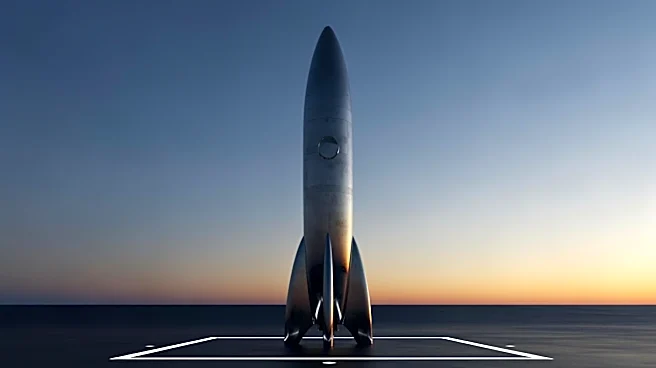
The Exploration Company, a European space startup, has announced its ambitious plan to develop a reusable heavy-lift launcher, primarily funded through private investment. The company aims to demonstrate
a development version of its Storm engine by 2028, with the full launcher expected to be operational by 2033. The Storm engine, central to this project, is designed to use liquid oxygen and bio-methane, and will feature a full-flow, staged combustion cycle. The heavy-lift rocket is expected to deliver 15-20 metric tons of payload to orbit, with future configurations potentially increasing this capacity to 40 metric tons in a reusable setup or 60 tons without reusing the first stage. The project has received backing from the European Space Agency and other European aerospace agencies.
Why It's Important?
This development marks a significant step in the competitive landscape of space exploration, particularly in the heavy-lift segment. The Exploration Company's focus on reusable technology aligns with global trends towards sustainable and cost-effective space travel. The successful implementation of this project could enhance Europe's position in the space industry, providing a competitive alternative to existing heavy-lift launchers. This could lead to increased opportunities for European and international space missions, potentially reducing costs and increasing access to space for various stakeholders, including governments, private companies, and research institutions.
What's Next?
The company plans to continue its development and testing phases, with a focus on achieving key technological milestones. The next steps include further testing of the Storm engine components and securing additional private funding to support the project's progression. The Exploration Company will also be competing for contracts under the European Space Agency's programs, which could provide additional financial and technical support. The success of these efforts will be crucial in meeting the 2033 operational target.