







What's Happening?
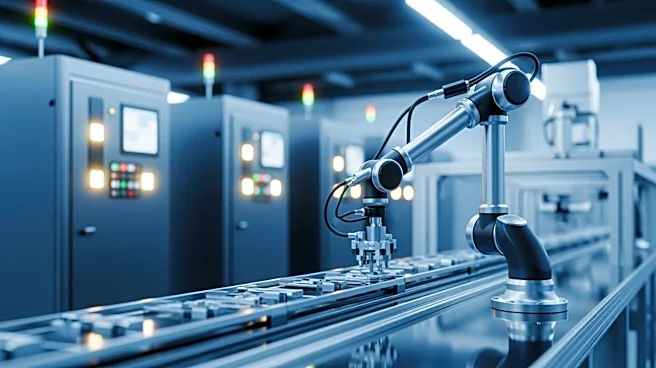
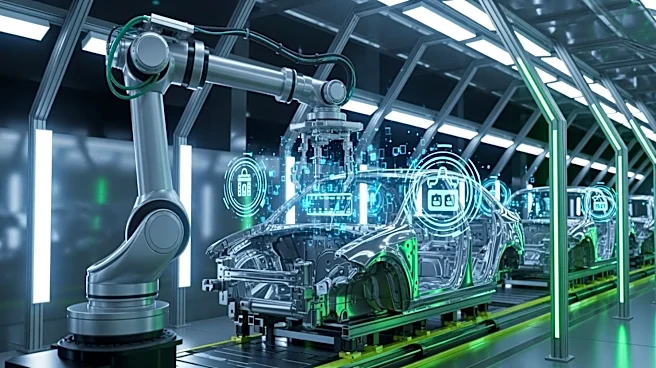
AI is transforming predictive maintenance in the automotive industry by improving the monitoring of industrial robots. Traditional maintenance relies on fixed thresholds, which often miss subtle signs of wear and tear. AI, however, continuously analyzes
data from robot controllers, learning what normal operation looks like and detecting deviations early. This approach allows for more accurate maintenance scheduling, reducing downtime and increasing efficiency. The automotive sector, with its high concentration of robots, stands to benefit significantly from these advancements.
Why It's Important?
The integration of AI in predictive maintenance can lead to substantial cost savings and productivity gains for the automotive industry. By reducing unexpected breakdowns and optimizing maintenance schedules, companies can improve operational efficiency and extend the lifespan of their robotic assets. This technological advancement is crucial for maintaining competitiveness in a sector that heavily relies on automation. Additionally, the ability to predict failures before they occur can enhance safety and reliability in manufacturing processes.
What's Next?
For many automotive plants, the next step involves connecting existing data systems to AI tools to fully leverage predictive maintenance capabilities. This requires an investment in data architecture and infrastructure. As more plants adopt AI-driven maintenance, the industry may see a shift towards more proactive and data-driven operational strategies. This could also lead to further innovations in AI applications within manufacturing, potentially influencing other sectors that rely on complex machinery.