
What's Happening?
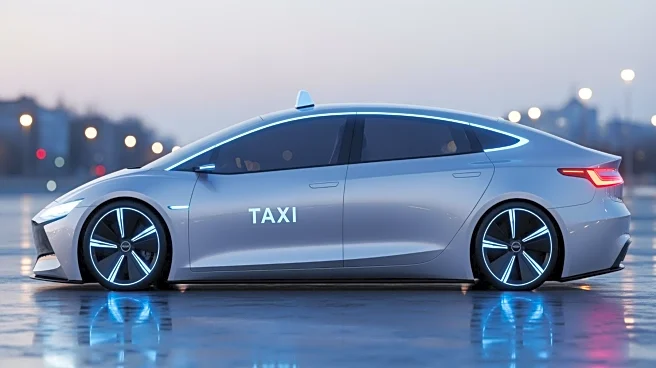
Tesla is preparing to launch its Cybercab, a self-driving vehicle designed to significantly reduce operational costs in the ride-sharing industry. Scheduled for release in 2030, the Cybercab aims to achieve
an operational cost of $0.20 per mile, which is notably lower than competitors like Waymo's Robotaxi at $0.40 per mile and the U.S. average vehicle ownership cost of $0.77 per mile. This cost efficiency is attributed to Tesla's high efficiency, reduced components through umboxed manufacturing, and automation that minimizes human labor. Elon Musk has emphasized Tesla's commitment to achieving these cost targets, despite acknowledging potential challenges in the initial production phases.
Why It's Important?
The introduction of Tesla's Cybercab could significantly disrupt the transportation industry by offering a more cost-effective alternative to existing ride-sharing services. This development is likely to attract consumers looking for affordable transportation options, potentially increasing Tesla's market share in the ride-sharing sector. The reduced operational costs could also pressure competitors to innovate and lower their prices, leading to broader changes in the industry. Additionally, the emphasis on automation and efficiency aligns with broader trends towards sustainable and technologically advanced transportation solutions.
What's Next?
As Tesla approaches the launch of the Cybercab, the company will focus on refining its manufacturing processes to overcome initial production challenges. The success of the Cybercab in the market will depend on its ability to deliver on the promised cost efficiencies and operational performance. Industry stakeholders, including competitors and regulatory bodies, will closely monitor Tesla's progress and may respond with strategic adjustments or policy considerations. The ride-sharing landscape could see increased competition and innovation as a result.