
What's Happening?
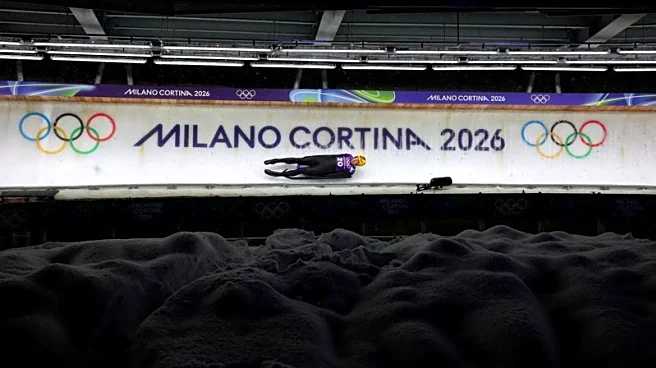
Germany's Max Langenhan is leading the men's singles luge event at the 2026 Winter Olympics after completing the first two runs with a time of 1 minute, 45.826 seconds. He is followed by Austria's Jonas
Mueller and Italy's Dominik Fischnaller, who are in second and third place, respectively. The competition is fierce, with Latvia's Kristers Aparjods and Italy's Leon Felderer also in close pursuit. Langenhan and Mueller are aiming for their first Olympic medals, while Fischnaller seeks to improve on his third-place finish from the previous Olympics.
Why It's Important?
The current standings in the men's luge event are critical as they set the stage for the final runs, where the fastest combined time will determine the gold medalist. Historically, the top three positions after the first two runs have often mirrored the final medal standings, making Langenhan, Mueller, and Fischnaller strong contenders for the podium. This event is a highlight of the Winter Olympics, showcasing the athletes' precision and speed. The results will not only impact the athletes' careers but also contribute to their countries' overall medal counts.
What's Next?
The final two runs of the men's singles luge event are scheduled for Sunday, where the athletes will compete for the medals. The pressure is on for Langenhan, Mueller, and Fischnaller to maintain their positions and secure a place on the podium. Other competitors, such as Aparjods and Felderer, will aim to close the gap and challenge the leaders. The outcome of this event will be closely watched by fans and could influence future competitions and training strategies in the sport of luge.