



What's Happening?
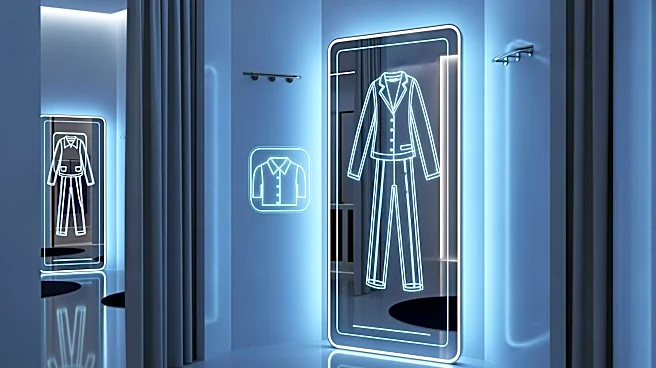
Artificial intelligence start-ups are increasingly being utilized by fashion retailers to address the issue of high product return rates, which are considered a significant challenge to profitability in the industry. These start-ups are developing virtual
try-on technologies that allow customers to visualize clothing fit and style before purchasing. This innovation aims to reduce the uncertainty over fit, a primary reason for returns and abandoned shopping carts. The National Retail Federation reported that 15.8% of annual retail sales were returned in 2025, amounting to $849.9 billion, with online sales seeing a return rate of 19.3%. AI tools are not only designed to reduce returns but also to enhance the shopping experience, thereby protecting retailers' margins. Companies like ASOS and Zara have implemented virtual try-on tools, while tech giants such as Amazon, Adobe, and Google are also exploring similar technologies.
Why It's Important?
The integration of AI-driven virtual try-on technology is crucial for the retail industry as it seeks to mitigate the financial impact of high return rates. Returns are a significant drag on profit margins, and reducing them can lead to improved profitability for retailers. The technology also enhances consumer confidence in online shopping, potentially increasing conversion rates and sales. As consumers become more price-sensitive amid inflationary pressures, providing a reliable fit solution can be a competitive advantage for retailers. Additionally, the technology supports sustainable practices by reducing the environmental impact associated with processing returns. The adoption of AI in retail reflects a broader trend towards digital transformation and innovation in the industry.
What's Next?
Retailers are expected to continue investing in AI technologies to further refine virtual try-on tools and improve their accuracy. As the technology evolves, it may become more widely adopted across different segments of the retail industry, including luxury brands and fast fashion. Retailers may also explore additional strategies to reduce returns, such as charging for return shipping or incentivizing exchanges over refunds. The success of these technologies could lead to partnerships between AI start-ups and major retail brands, driving further innovation and potentially reshaping consumer expectations in online shopping.
Beyond the Headlines
The use of AI in retail raises ethical considerations regarding data privacy and the potential for bias in virtual try-on applications. Ensuring that these technologies are inclusive and accurately represent diverse body types and skin tones is essential. Additionally, the shift towards AI-driven solutions may impact employment in the retail sector, as automation reduces the need for certain roles. The long-term implications of AI adoption in retail could include changes in consumer behavior, with shoppers increasingly relying on digital tools for purchasing decisions.