




What's Happening?
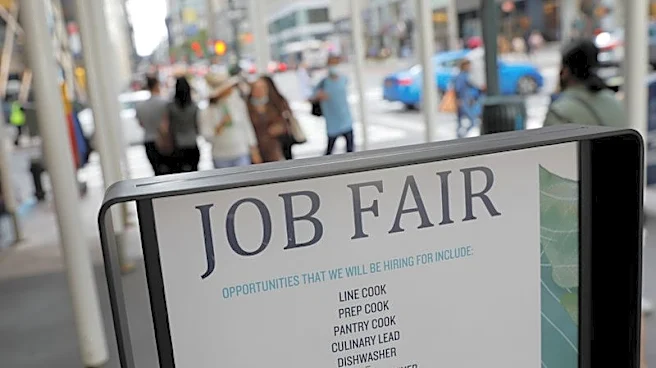
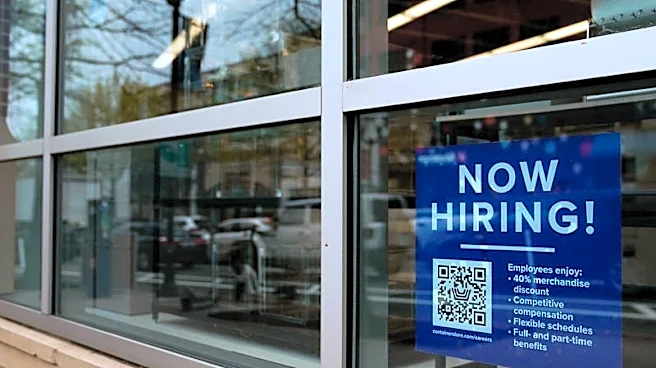
The U.S. labor market experienced a significant boost in May, with nonfarm payrolls increasing by 172,000, according to the Bureau of Labor Statistics. This figure surpasses the Dow Jones consensus estimate of 80,000 and follows an upward revision of April's
job gains to 179,000. The unemployment rate remained steady at 4.3%. The leisure and hospitality sector led the job growth with 70,000 new positions, while local government and healthcare added 55,000 and 35,000 jobs, respectively. Average hourly earnings rose by 0.3% for the month, marking a 3.4% increase over the past year. Despite high energy prices and inflation, the labor market continues to show resilience.
Why It's Important?
The unexpected surge in job growth highlights the robustness of the U.S. labor market amid economic challenges such as inflation and high energy costs. This development is crucial for economic stakeholders, as it suggests a stable employment environment that could support consumer spending and economic growth. The steady unemployment rate and wage growth indicate that the labor market is not in immediate need of intervention, providing a positive outlook for policymakers and businesses. However, the concentration of job gains in specific sectors and the potential impact of artificial intelligence on employment remain areas of concern.
What's Next?
Looking ahead, the labor market's performance will likely influence Federal Reserve policymakers as they consider future monetary policy decisions. The continued strength in job creation may lead to discussions on interest rate adjustments to manage inflation. Additionally, businesses and industries will need to monitor the evolving impact of technology on employment, as artificial intelligence begins to affect labor dynamics. Stakeholders will be watching for any shifts in hiring trends and sectoral growth in the coming months.