
What's Happening?
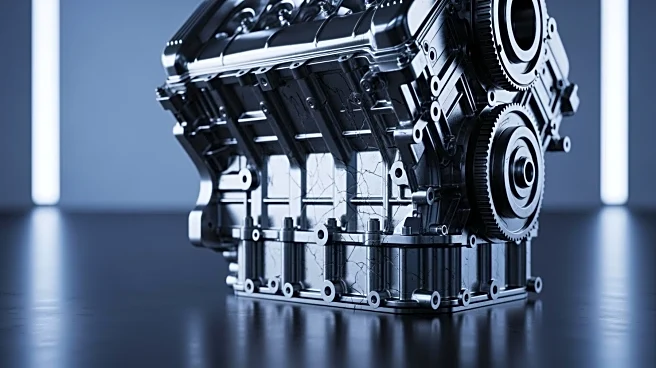
A Lamborghini Huracán V10 engine, known for its high-performance capabilities, failed at just under 20,000 miles, as revealed by a teardown conducted by I Do Cars on YouTube. The engine, from a 2018 Huracán Performante,
reportedly failed at around 7,000 RPM, which is within its normal operating range. The teardown uncovered significant damage, including metal debris, a broken valve, and damaged combustion chambers. Despite the catastrophic failure, the engine's bearings appeared healthy, suggesting it maintained oil pressure until the failure occurred. The exact cause of the failure remains unclear, with theories ranging from a stuck injector causing hydrolock to potential over-revving.
Why It's Important?
This incident highlights the vulnerability of high-performance engines, even those designed to withstand extreme conditions. The failure of the Lamborghini Huracán V10 engine underscores the potential risks and costs associated with owning high-performance vehicles. For manufacturers, it raises questions about the durability and reliability of their engineering under real-world conditions. For consumers, it serves as a cautionary tale about the potential for unexpected and costly repairs, even in luxury vehicles. The incident may influence future engineering practices and consumer expectations regarding the reliability of high-performance engines.
What's Next?
The automotive industry may see increased scrutiny on the reliability of high-performance engines, potentially leading to more rigorous testing and quality assurance measures. Manufacturers might also explore improvements in engine design to prevent similar failures. For consumers, this incident could lead to more cautious purchasing decisions, with a greater emphasis on warranty coverage and reliability. The findings from this teardown could also inform future engineering and design improvements in high-performance vehicles.
Beyond the Headlines
The failure of the Lamborghini Huracán V10 engine also raises broader questions about the sustainability and environmental impact of high-performance vehicles. As the automotive industry shifts towards more sustainable practices, incidents like this may accelerate the transition to electric and hybrid technologies, which promise greater reliability and lower environmental impact. Additionally, the incident may prompt discussions about the balance between performance and durability in automotive design.