






What's Happening?
Oxbo, a global leader in advanced farming equipment, has inaugurated a new manufacturing facility in Bergen, New York. This state-of-the-art site spans approximately 200,000 square feet and is dedicated to producing advanced harvesters for high-value
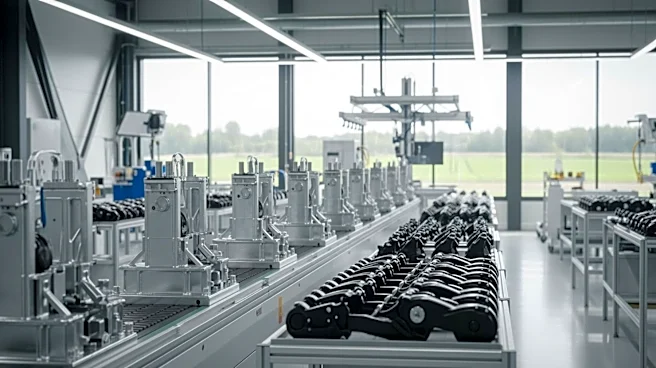
crops such as seed corn, sweet corn, green beans, and peas. The facility integrates design, manufacturing, testing, and training, enhancing operational efficiency. Joe Perzia, President of the High Value Crop Division, emphasized the facility's role in delivering innovative, high-quality products and strengthening customer support. The site features advanced technologies like laser-based fabrication, robotic welding, and multiple assembly lines, along with a product showroom and outdoor test track for customer demonstrations.
Why It's Important?
The opening of Oxbo's new facility is a significant development for the agricultural sector in North America. It underscores the company's commitment to innovation and job creation, with the site expected to employ around 250 people in various roles. This investment not only bolsters Oxbo's position as a leading employer in agricultural technology but also enhances its capacity to support sustainable, long-term growth. The facility's advanced manufacturing capabilities are poised to improve production quality and efficiency, benefiting farmers who rely on specialized harvesting equipment. Additionally, the move strengthens Oxbo's presence in New York, fostering regional economic development and collaboration.
What's Next?
With the new facility operational, Oxbo is set to enhance its production capabilities and customer service. The integration of engineering and production teams at the Bergen site is expected to facilitate faster communication and innovation. As the company continues to expand its operations, it may explore further advancements in agricultural technology and potential collaborations with local partners. The facility's focus on sustainable growth and innovation positions Oxbo to meet the evolving needs of the agricultural industry, potentially leading to new product developments and market opportunities.