

What's Happening?
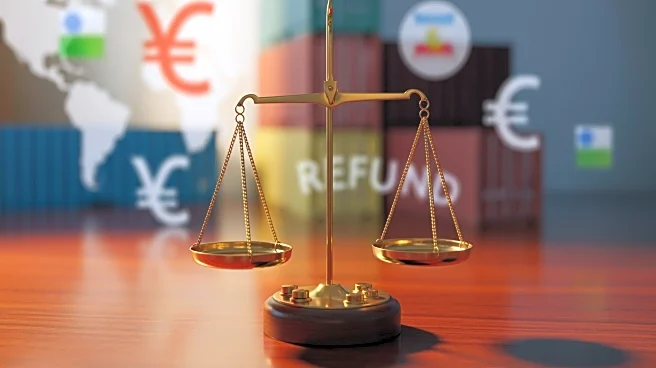
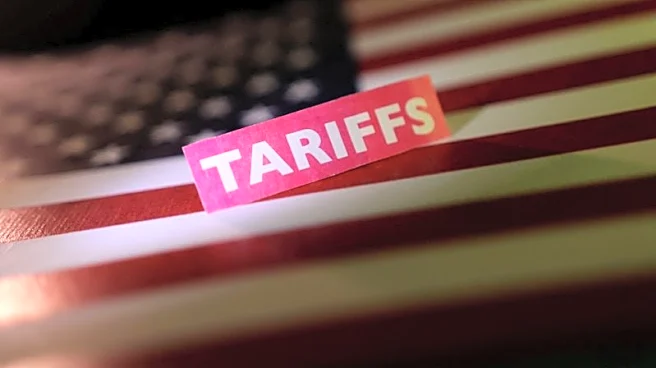
A recent U.S. Supreme Court decision has invalidated tariffs imposed by President Trump under the International Emergency Economic Powers Act (IEEPA) of 1977, potentially leading to over $130 billion in refunds for U.S. importers. The tariffs, which included
a 10% baseline on goods from most trading partners and higher rates on imports from countries like Canada, Mexico, and China, were deemed unauthorized. Following the ruling, the U.S. Court of Appeals for the Federal Circuit has expedited the process for determining refunds, remanding the issue to the U.S. Court of International Trade (CIT). This has sparked a surge in litigation, with around 2,000 importers filing suits to reclaim duties paid. The CIT is now tasked with managing what could be the largest tariff refund operation in U.S. history.
Why It's Important?
The Supreme Court's decision and subsequent legal actions could have significant financial implications for U.S. importers, offering potential cash-flow relief after years of tariff burdens. However, the process is expected to be complex and lengthy, possibly involving years of litigation. For the U.S. Treasury, delays in refunds could result in substantial interest costs. The ruling also indirectly benefits European exporters by removing tariff burdens, although they will not receive direct refunds. The decision underscores the importance of legal checks and balances in trade policy and highlights ongoing volatility in U.S.-EU trade relations.
What's Next?
The CIT will need to establish a framework for processing the vast number of refund claims, which could take years to resolve. Meanwhile, the U.S. administration has imposed new tariffs under the Trade Act of 1974, signaling potential further trade disputes. European trading partners are closely monitoring the situation, as the outcome of refund proceedings could influence U.S. import demand and future trade negotiations. The EU has paused ratification of a new trade agreement with the U.S., pending further clarity on the evolving trade landscape.