





What's Happening?
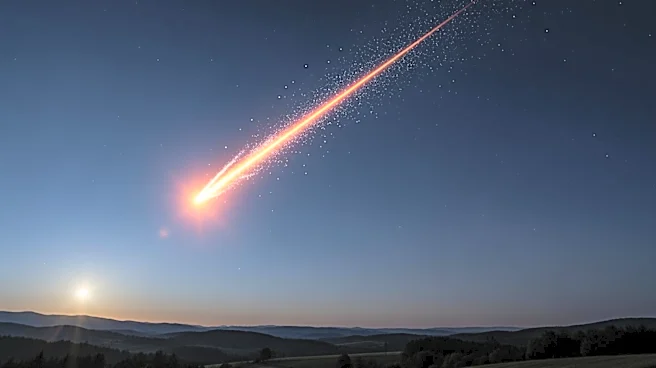
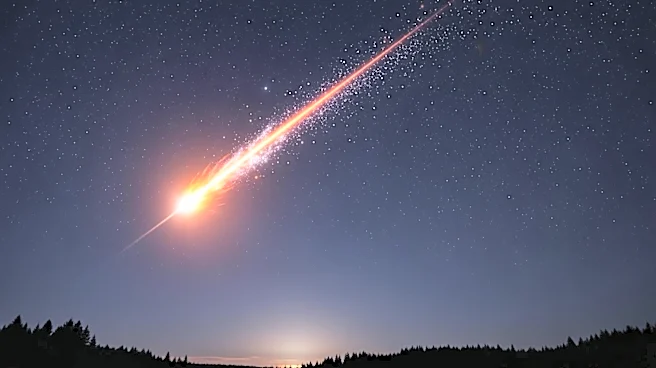
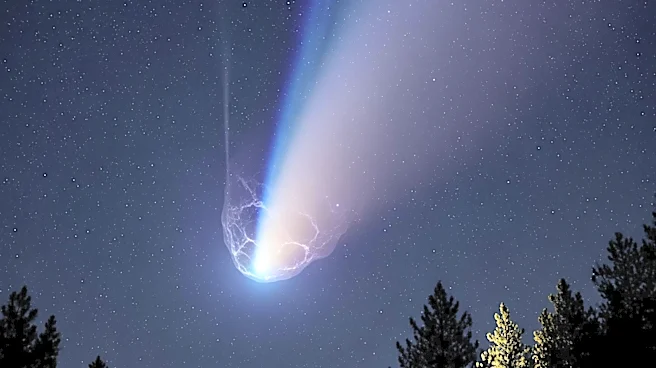
The Lyrid meteor shower is set to peak overnight on April 21-22, offering stargazers the opportunity to witness up to 18 shooting stars per hour. This annual celestial event occurs when Earth passes through the debris trail left by Comet C/1861 G1 Thatcher.
The meteors will appear to originate from the constellation Lyra, near the bright star Vega. The American Meteor Society notes that the Lyrids are known for their bright, fast-moving meteors, which can occasionally produce spectacular fireballs. The best viewing conditions are expected in the early hours of April 22, when the moon will be less visible, providing a darker sky for optimal meteor spotting.
Why It's Important?
The Lyrid meteor shower is a significant event for astronomy enthusiasts and the general public, offering a chance to connect with the natural world and observe a stunning display of celestial activity. Such events can inspire interest in astronomy and science, encouraging educational pursuits and public engagement with space-related topics. Additionally, meteor showers like the Lyrids provide valuable data for scientists studying the composition and behavior of comets and asteroids, contributing to our understanding of the solar system. The event also highlights the importance of preserving dark skies for astronomical observations.