


What's Happening?
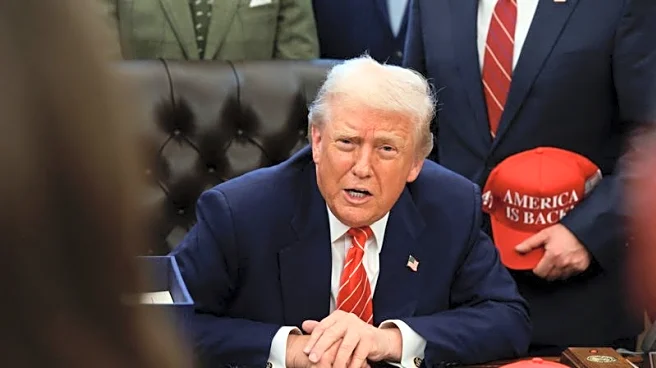
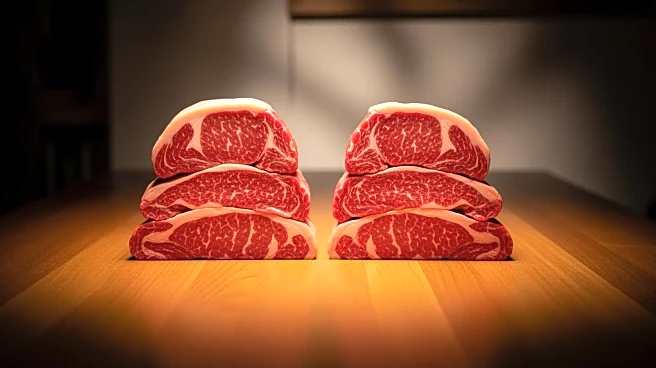
President Trump's executive order to increase beef imports from Argentina aims to address high beef prices in the U.S. by allowing an additional 80,000 metric tons of lean beef trimmings to enter the market tariff-free. However, experts, including food economist David Ortega, argue that this volume is too small to significantly impact overall beef prices, which have been driven up by a combination of high demand and reduced cattle supply due to extreme weather conditions. The U.S. Department of Agriculture reports that the country's cattle supply is at a 75-year low, exacerbating price pressures.
Why It's Important?
The decision to increase Argentine beef imports highlights the challenges facing the U.S. beef industry, including the need to rebuild the domestic
cattle herd to stabilize prices. While the import increase is a short-term measure, experts emphasize that long-term solutions are necessary to address the underlying supply issues. The move also reflects broader economic pressures, as consumers face rising food costs. The administration's actions underscore the complexity of balancing trade policies with domestic agricultural needs.
What's Next?
The focus will likely remain on strategies to rebuild the U.S. cattle herd, which experts say is essential for long-term price stabilization. This process involves retaining heifers for breeding rather than slaughtering them for immediate beef supply. The administration may continue to explore trade agreements and import strategies to manage short-term supply challenges, while industry stakeholders advocate for policies that support domestic production and market stability.