






What's Happening?
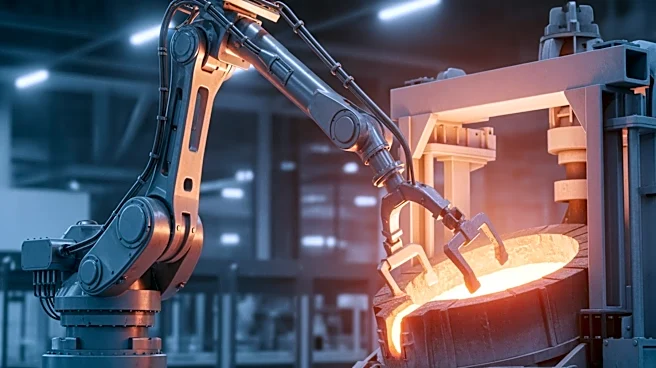
The aluminium smelting industry is increasingly turning to robotic process automation (RPA) to enhance safety and efficiency in hazardous environments. This shift is driven by the industry's need for precision and repeatability in high-intensity processes.
The adoption of autonomous robotics is seen as a strategic move to address extreme thermal hazards and repetitive tasks such as anode tending and molten metal pouring. Recent geopolitical tensions, including Iranian strikes on smelters in the UAE and Bahrain, have disrupted global supply chains, reinforcing the need for automation. Companies like AlumatIQ are leading the charge, offering solutions that improve safety and operational efficiency. The global smelt robot market is projected to grow significantly, with substantial expansion expected in the coming years.
Why It's Important?
The integration of robotic automation in aluminium smelting is crucial for enhancing workplace safety and operational efficiency. By removing humans from dangerous environments, companies can reduce the risk of industrial accidents and improve productivity. This technological shift is particularly important in regions affected by geopolitical instability, where disruptions to supply chains can have significant economic impacts. The growing demand for automation solutions presents a substantial market opportunity, especially in Europe and North America, where safety regulations and labor costs drive the need for innovation. As the industry continues to evolve, automation will play a key role in maintaining competitiveness and meeting global demand for aluminium.
What's Next?
The future of aluminium smelting will likely see increased adoption of robotic automation, with companies investing in advanced technologies to enhance safety and efficiency. As geopolitical tensions continue to affect supply chains, the demand for reliable and autonomous solutions will grow. Industry leaders are expected to focus on developing AI-driven systems capable of handling complex tasks and adapting to process variability. The market for smelting robotics is poised for expansion, with early adopters in Europe and North America leading the way. Continued innovation and investment in automation will be essential for addressing the challenges of the aluminium smelting industry.
Beyond the Headlines
The shift towards automation in aluminium smelting raises important ethical and environmental considerations. While automation improves safety and efficiency, it also impacts employment, potentially reducing the need for human labor in hazardous environments. Companies must balance technological advancements with social responsibility, ensuring that workers are retrained and supported during transitions. Additionally, the environmental benefits of automation, such as reduced energy consumption and emissions, align with global sustainability goals. As the industry moves forward, stakeholders must address these broader implications to ensure a responsible and sustainable future.