






What's Happening?
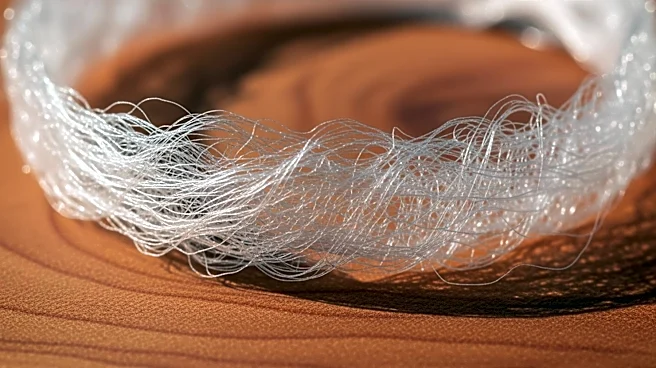
Researchers have developed a new type of regenerated cellulose fiber inspired by the architecture of cherry bark, achieving spider silk-like toughness. Using a bioinspired microfluidic spinning process, these fibers exhibit enhanced tensile strength and
fracture strain, addressing the brittleness that typically limits cellulose materials. The innovation holds promise for high-performance, sustainable textiles applicable in various industries, including automotive and aerospace. The fibers' unique biaxial orientation structure contributes to their mechanical properties, offering a potential alternative to traditional materials.
Why It's Important?
This development represents a significant advancement in sustainable material science, offering a potential solution to the limitations of current bio-based fibers. The ability to produce tough, durable fibers from renewable resources like cellulose could reduce reliance on synthetic materials, aligning with global sustainability goals. The innovation also opens new possibilities for the textile industry, providing a competitive edge in markets demanding high-performance, eco-friendly products. As industries seek to minimize environmental impact, such breakthroughs are crucial for future material development.
What's Next?
The next steps involve scaling up production to meet industrial demands while maintaining the fibers' unique properties. Researchers aim to optimize the manufacturing process for higher throughput and explore applications beyond textiles, such as in automotive and aerospace components. Continued research may also focus on adapting the technology to other natural polysaccharides, broadening the range of sustainable materials available for various applications. Successful commercialization could lead to widespread adoption, driving innovation in sustainable manufacturing practices.