







What's Happening?
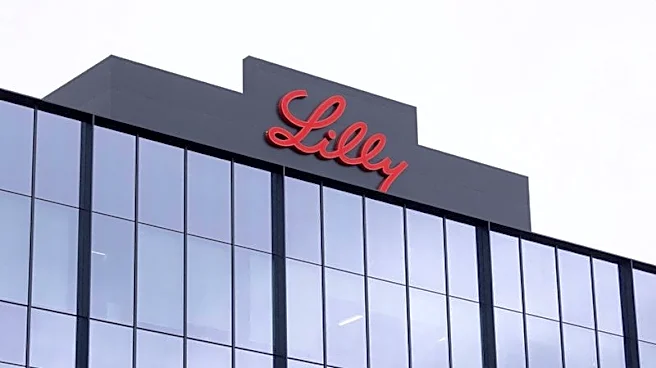
Eli Lilly has announced its agreement to acquire Kelonia Therapeutics for up to $7 billion. This acquisition aims to strengthen Lilly's oncology pipeline by incorporating Kelonia's early clinical phase lentiviral in vivo chimeric antigen receptor T-cell
(CAR T) therapy, specifically targeting relapsed/refractory multiple myeloma. Kelonia's lead program, KLN-1010, is a one-time intravenous gene therapy designed to generate anti-B-cell maturation antigen (BCMA) CAR T cells. The therapy has shown promising results, with a 100% minimal residual disease-negative response rate in early clinical trials. The acquisition is part of Lilly's broader strategy to expand its capabilities in cell therapy, following other recent acquisitions in the biotech sector.
Why It's Important?
This acquisition is significant as it represents a strategic move by Eli Lilly to enhance its position in the competitive field of cancer cell therapies. By integrating Kelonia's innovative in vivo CAR T technology, Lilly aims to overcome existing challenges in cell therapy manufacturing and administration, potentially offering more accessible and effective treatments for multiple myeloma. The deal also reflects Lilly's broader ambition to capitalize on its financial success from obesity and diabetes drugs, reinvesting in cutting-edge therapies that could transform cancer treatment. This move could influence other major pharmaceutical companies to pursue similar acquisitions, intensifying competition in the biotech industry.
What's Next?
The acquisition is subject to regulatory approvals and is expected to close in the second half of 2026. Upon completion, Lilly plans to integrate Kelonia's technology into its existing operations, potentially expanding the reach of CAR T therapies beyond hematologic malignancies to other serious diseases. The success of this integration could prompt further investments in in vivo CAR T technology, potentially accelerating the development of new treatments. Additionally, the acquisition may prompt competitors like Johnson & Johnson to explore similar opportunities to strengthen their own oncology pipelines.