
What's Happening?
Hauser and Wirth, a prominent international art gallery, has announced the acquisition of the historic Palazzo Forcella De Sata in Palermo, Sicily. The gallery's president and cofounder, Iwan Wirth, confirmed
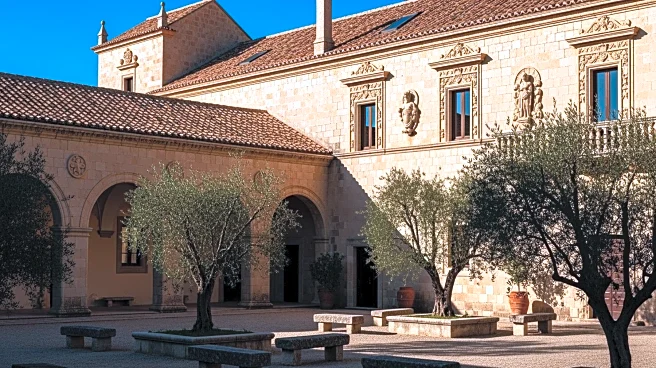
the purchase, which was first reported by Italian newspapers Il Gironale dell’Arte and La Repubblica. The palazzo, located in the ancient Arab quarter of Kalsa near Palermo's waterfront, is a significant example of 19th-century eclectic architecture. It was previously a venue for Manifesta 12, a European biennial, and has served various roles, including as a private art gallery and a gambling den. The acquisition is subject to historical monument restrictions, allowing Sicilian authorities and Italy’s Ministry of Culture the option to preempt the sale. Hauser and Wirth plans to use the main floor of the 21,000-square-foot building as an exhibition space, with structural work expected to be completed by 2030.
Why It's Important?
The acquisition of Palazzo Forcella De Sata by Hauser and Wirth underscores the gallery's strategic expansion in the Mediterranean region, enhancing its global footprint. This move is significant for the art world as it highlights the growing trend of major galleries investing in historic properties to create cultural destinations. The restoration and use of such a site for art exhibitions can boost local tourism and cultural engagement, potentially revitalizing the area economically and culturally. For the art community, this development offers a new venue for showcasing contemporary art in a historically rich setting, fostering cultural exchange and dialogue.
What's Next?
Following the acquisition, Hauser and Wirth will await the expiration of the right of refusal period, after which structural renovations can commence. The gallery has not yet disclosed specific programming or renovation plans, but the completion of structural work is anticipated by 2030. The development of this site into an arts destination may attract attention from cultural institutions, artists, and tourists, potentially influencing similar projects in other historic locations. The gallery's expansion could also prompt responses from local cultural bodies and the international art community, eager to see how the space will be utilized.