



What's Happening?
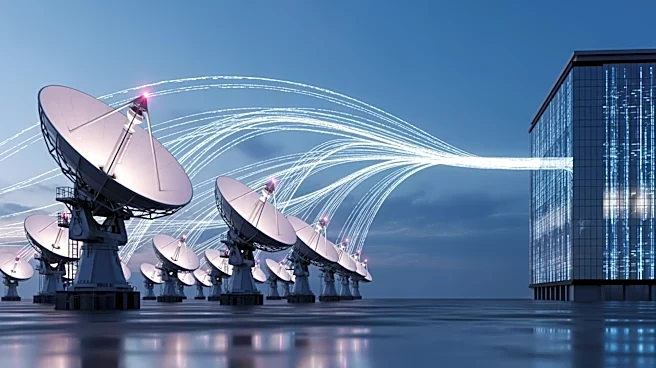
Meta has entered into an agreement with Overview Energy, a startup based in Ashburn, Virginia, to supply up to one gigawatt of electricity for its AI data centers. This electricity will be collected by satellites in orbit and transmitted to ground-based
solar stations as infrared light, even during nighttime. This innovative approach aims to address the limitations of traditional solar power, which ceases to function after sunset, necessitating backup power sources. Overview Energy plans to launch its first satellite into low Earth orbit in January 2028 to test this technology. If successful, a large-scale deployment is expected by 2030, involving a fleet of a thousand satellites in geostationary orbit. This network is projected to cover about a third of the planet, from the U.S. Pacific Coast to Western Europe.
Why It's Important?
This agreement represents a significant step towards revolutionizing energy supply for data centers, which are increasingly consuming more electricity due to the demands of artificial intelligence systems. By utilizing space-based solar power, Meta could significantly reduce its reliance on traditional energy sources and enhance its renewable energy capacity. This development could set a precedent for other tech companies, potentially leading to a broader adoption of space-based energy solutions. The success of this initiative could also stimulate growth in the space energy sector, creating new opportunities for innovation and investment.
What's Next?
The next major milestone for this project is the launch of Overview Energy's first satellite in 2028, which will test the feasibility of transmitting solar energy from space to Earth. If the test is successful, the company plans to proceed with the deployment of a thousand satellites by 2030. This timeline suggests that significant advancements in space-based energy technology could be realized within the next decade. Stakeholders, including tech companies and energy providers, will likely monitor the progress closely, as it could influence future energy strategies and investments.