



What's Happening?
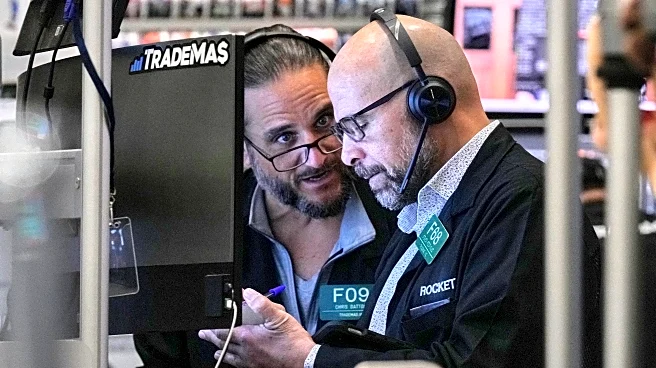
In early 2026, generative artificial intelligence (AI) has experienced a significant leap in capabilities, evolving from simple chatbots to sophisticated executive assistants. This rapid advancement has led to a widespread sell-off in various sectors,
including software, legal, insurance, and cybersecurity, as investors react to the potential disruptions AI could cause. Nvidia CEO Jensen Huang highlighted the transformative nature of these 'agentic systems,' which are now capable of reasoning and performing complex tasks autonomously. The swift progression of AI technology has outpaced existing regulatory frameworks, raising concerns about the lack of safety measures. New York State Assemblyman Alex Bores, who authored the first major AI safety law in the U.S., is advocating for more stringent regulations. However, he faces opposition from a $125 million super PAC backed by prominent tech figures, who argue for looser regulations to foster innovation.
Why It's Important?
The rapid development of generative AI poses significant implications for various U.S. industries and regulatory bodies. As AI systems become more autonomous, they could potentially replace human jobs, leading to economic and social challenges. The tension between innovation and regulation is evident, with tech leaders pushing for minimal oversight to maintain competitive advantages, while policymakers like Alex Bores emphasize the need for safety and ethical considerations. The outcome of this debate could shape the future of AI regulation in the U.S., impacting how technology is integrated into society and the economy. The stakes are high, as the decisions made now could influence the balance between technological advancement and public safety.
What's Next?
The ongoing debate over AI regulation is expected to play a significant role in the 2026 midterm elections. Assemblyman Bores, who is running for Congress, has become a focal point in this discussion, facing significant opposition from tech-backed political action committees. The outcome of his campaign could set a precedent for future regulatory approaches to AI. As the technology continues to evolve, stakeholders from various sectors, including government, industry, and civil society, will need to collaborate to establish effective regulatory frameworks that balance innovation with safety. The decisions made in the coming months could have long-lasting effects on the trajectory of AI development and its integration into everyday life.