


What's Happening?
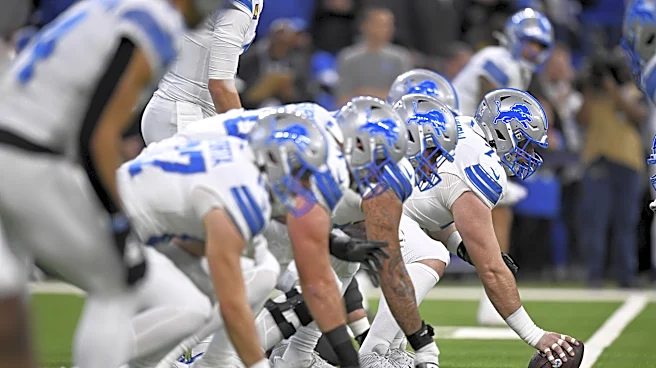
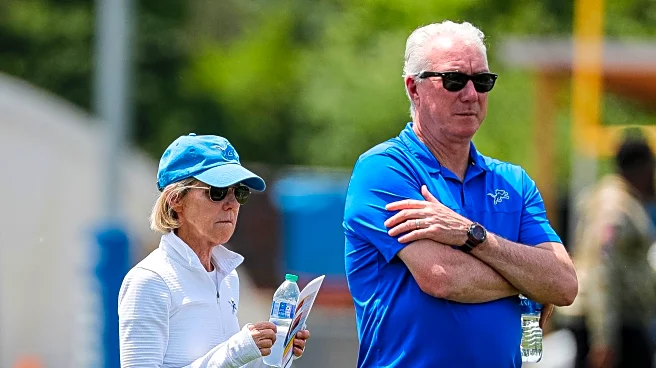
When Detroit Lions center Frank Ragnow retired last year, he was required to repay a portion of his signing bonus to the team. Lions President Rod Wood confirmed that this practice is standard for the franchise when a player retires with seasons remaining
on their contract. The precedent for this policy dates back to Barry Sanders, who also had to repay bonus money upon retirement. Wood emphasized that the repayment is justified as players are returning money paid in advance for services not rendered. The exact amount Ragnow repaid was not disclosed, but it was estimated to be $3 million based on his $6 million signing bonus and the remaining two years on his contract.
Why It's Important?
The Lions' policy of requiring players to repay signing bonuses upon early retirement highlights the financial and contractual complexities within professional sports. This practice can lead to friction between players and the franchise, as seen in the cases of Barry Sanders and Calvin Johnson. It underscores the importance of contractual obligations and the financial implications for players who choose to retire early. For the Lions, this policy ensures that they recoup funds for services not provided, maintaining financial integrity and accountability within the organization.
Beyond the Headlines
The requirement for players to repay signing bonuses raises ethical questions about the balance between business interests and player welfare. While it is legally permissible, it may affect the relationship between the franchise and its players, potentially influencing future negotiations and player retention. This practice also reflects broader trends in professional sports where financial considerations often take precedence over personal circumstances, highlighting the need for clear communication and understanding of contractual terms.