

What's Happening?
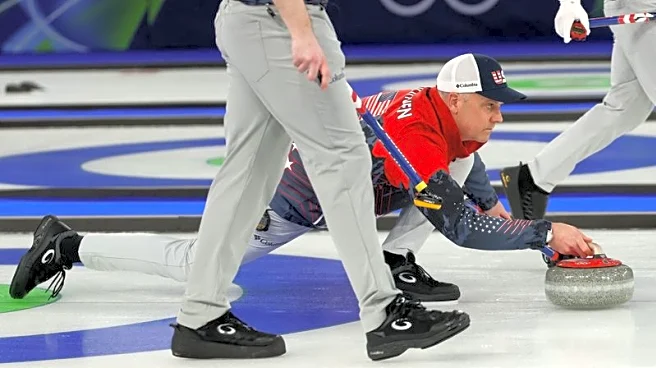
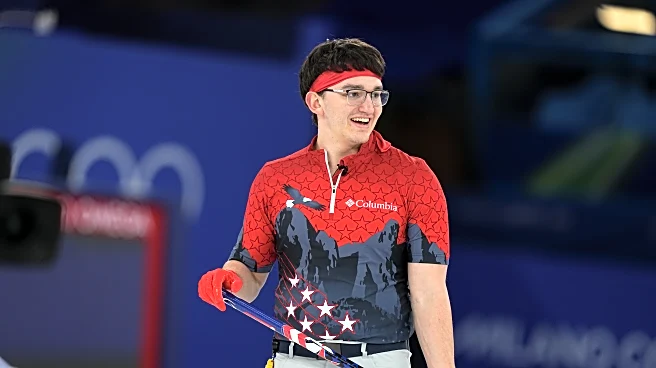
Rich Ruohonen, a 54-year-old personal injury attorney from Minnesota, has made history by becoming the oldest U.S. Winter Olympian. He competed as part of the men's curling team at the 2026 Winter Games in Milan. Ruohonen was an alternate for Team USA and participated in the match against Switzerland, which the U.S. lost 8-3. His participation marks a significant milestone, surpassing the previous record set by 52-year-old Joseph Savage in 1932. Ruohonen's journey to the Olympics was marked by perseverance, having participated in five Olympic trials from 2006 to 2022, narrowly missing out in 2018. He initially stopped competing after 2022 but returned to the sport, joining Danny Casper's team as a substitute when Casper was sidelined due to Guillain-Barre
Syndrome. Ruohonen's involvement in the team continued even after Casper's recovery, leading to his historic participation in the Olympics.
Why It's Important?
Ruohonen's achievement highlights the inclusivity and evolving nature of the Olympic Games, where age is becoming less of a barrier to participation. His story is a testament to perseverance and dedication, inspiring athletes of all ages. This development could encourage more mature athletes to pursue competitive sports, potentially leading to a broader age range in future Olympic events. Additionally, Ruohonen's participation underscores the importance of alternate players in team sports, showcasing how they can play crucial roles in high-stakes competitions. His journey also brings attention to the sport of curling, which may gain increased interest and participation in the U.S. as a result of his historic achievement.
What's Next?
Ruohonen's participation in the 2026 Winter Olympics may inspire other older athletes to continue competing at high levels, potentially influencing team selections and training programs. The curling community might see a surge in interest, leading to increased funding and development programs aimed at nurturing talent across all age groups. As the Olympics continue, Ruohonen's story could be highlighted in media coverage, further promoting the sport and encouraging a diverse range of participants. The U.S. Olympic Committee may also consider strategies to support older athletes, ensuring they have the resources and opportunities to compete on the world stage.