

What's Happening?
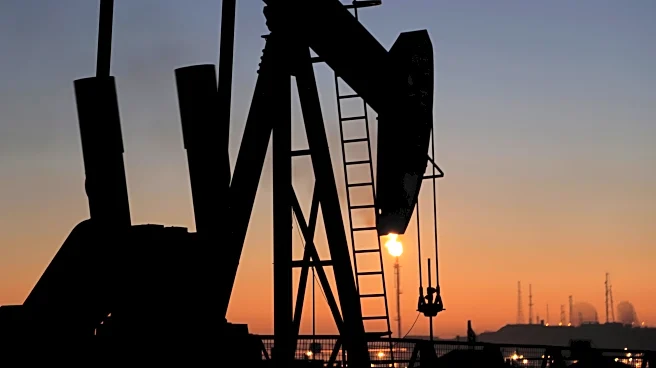
Goldman Sachs analysts have projected that sustained increases in oil prices will benefit two major Chinese petroleum companies, China National Offshore Oil Corporation (CNOOC) and PetroChina. This prediction follows recent disruptions in the Strait of
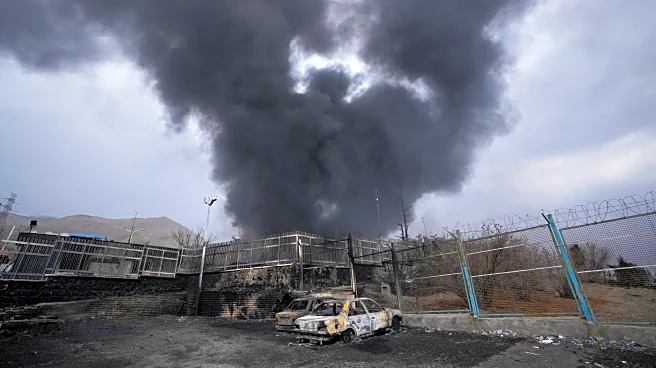
Hormuz due to Middle East tensions, particularly the Iran conflict, which has halted shipping through this critical passage. The Strait of Hormuz is a vital channel for global petroleum liquids, with about 20% of these flows passing through it, primarily to Asian countries. The resulting supply constraints have caused Brent crude futures to soar by 28% last week, marking the largest weekly gain since April 2020. Goldman Sachs suggests that if Brent crude prices remain between $80 and $90 per barrel, the full-year free cash flow for CNOOC and PetroChina could increase by over 10%. However, the analysts have a less favorable outlook for Sinopec, another state-owned oil giant, due to domestic pricing mechanisms that do not account for international freight rate increases.
Why It's Important?
The potential rise in oil prices and the subsequent financial boost for CNOOC and PetroChina highlight the interconnectedness of global energy markets and geopolitical events. For U.S. investors, this development underscores the complexities of investing in foreign energy stocks, especially given the Treasury Department's restrictions on purchasing CNOOC shares since 2021. The situation also emphasizes the strategic importance of the Strait of Hormuz in global energy supply chains. As China is the world's largest crude importer, any prolonged disruption in this region could have significant implications for global energy prices and supply stability. Additionally, the focus on Chinese petroleum companies reflects broader trends in energy investment, where geopolitical risks and market dynamics play crucial roles.
What's Next?
If tensions in the Middle East persist, further disruptions in the Strait of Hormuz could lead to continued volatility in global oil markets. This may prompt countries reliant on these energy supplies to seek alternative sources or increase domestic production. For investors, monitoring geopolitical developments and their impact on energy stocks will be crucial. Additionally, the response from other major oil-producing nations and organizations, such as OPEC, could influence future oil price trends and market stability.