
What's Happening?
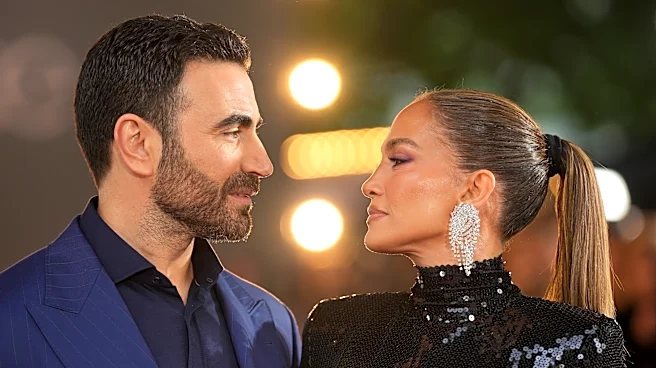
In the romantic comedy 'Office Romance,' Jennifer Lopez stars as Jackie Cruz, a high-powered airline CEO, opposite Brett Goldstein's character, Daniel Blanchflower, a company lawyer. The film, directed
by Ol Parker, follows the unexpected romantic developments between the two leads, set against the backdrop of corporate life. The narrative explores themes of professional boundaries and personal connections, with a comedic touch. The film's release on Netflix highlights its appeal as a light-hearted, star-driven romcom, featuring supporting performances that add depth and humor to the storyline.
Why It's Important?
'Office Romance' underscores the enduring appeal of romantic comedies, particularly those featuring well-known stars like Jennifer Lopez. The film's exploration of workplace dynamics and romantic entanglements may resonate with audiences seeking relatable and entertaining narratives. Additionally, the film's release on a major streaming platform like Netflix reflects the growing trend of digital distribution, which allows for broader accessibility and viewership. The film's success could influence future romcom productions, encouraging similar star-driven projects.
What's Next?
As 'Office Romance' continues to stream on Netflix, it may attract a diverse audience, potentially leading to discussions about the portrayal of workplace relationships in media. The film's reception could impact the careers of its stars, particularly Brett Goldstein, who co-wrote the screenplay. Positive audience feedback may encourage further collaborations between the cast and crew, as well as inspire similar projects in the romcom genre.
Beyond the Headlines
The film's depiction of corporate life and romantic entanglements may prompt viewers to reflect on their own experiences with workplace relationships. Additionally, the film's comedic approach to cultural differences between British and American characters adds a layer of social commentary, highlighting the nuances of cross-cultural interactions. This aspect of the film could contribute to broader discussions on cultural representation in media.