





What's Happening?
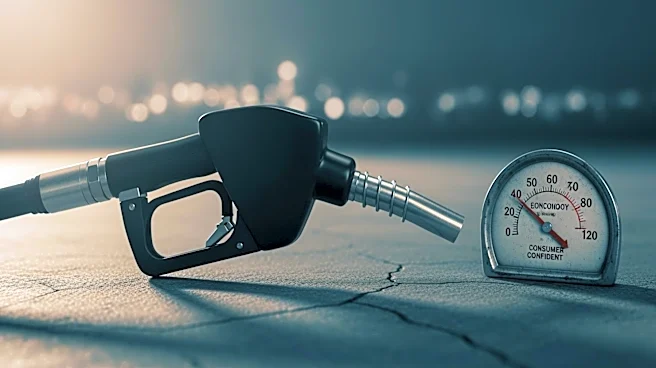
Consumer sentiment in the U.S. has reached a new record low, according to the University of Michigan's latest survey. The ongoing war in Iran has kept energy prices elevated, contributing to a sentiment reading of 48.2, the lowest since records began
in 1952. The survey indicates that about one-third of consumers are concerned about gasoline prices, while 30% are worried about tariffs. The closure of the Strait of Hormuz, a critical passageway for global oil, has exacerbated these concerns. Despite the low sentiment, consumer spending has not significantly decreased, supported by a resilient labor market with steady unemployment rates.
Why It's Important?
The decline in consumer sentiment reflects widespread economic anxiety, particularly regarding energy costs and their impact on personal finances. While consumer spending remains stable, the persistent low sentiment could eventually lead to reduced economic activity if confidence does not improve. The situation underscores the interconnectedness of global events, such as the Iran conflict, with domestic economic conditions. Businesses, especially those reliant on consumer spending, may face challenges if sentiment does not recover, potentially affecting their revenue and growth prospects.
What's Next?
The trajectory of consumer sentiment will likely depend on developments in the Middle East and the resolution of energy supply disruptions. Policymakers and businesses will need to monitor these trends closely, as prolonged low sentiment could necessitate economic interventions or adjustments in business strategies. The labor market's stability will be crucial in maintaining consumer spending levels, but any shifts in employment conditions could exacerbate economic concerns.