



What's Happening?
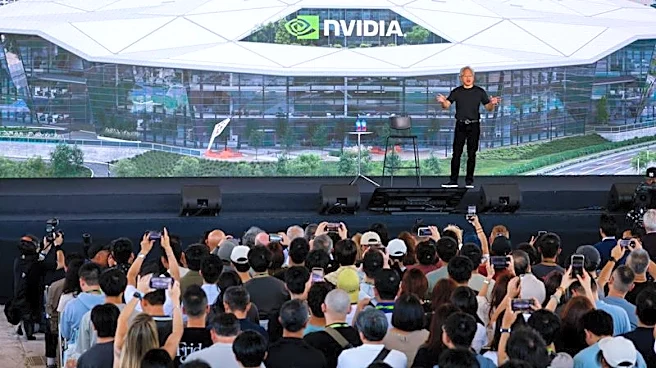
At the Computex event in Taipei, Nvidia CEO Jensen Huang introduced the company's latest laptop system-on-chips, the N1 and N1X. These chips are designed to enhance performance and are part of Nvidia's broader strategy to integrate AI capabilities into
computing devices. The N1X chip features up to 20 Arm CPU cores and 6,144 CUDA cores, supporting up to 128GB of LPDDR5X memory, while the N1 offers 10- and 12-core configurations with up to 64GB of memory. These chips are paired with Nvidia's Blackwell GPUs and are aimed at supporting Windows on Arm. The announcement was accompanied by coordinated social media posts from Nvidia, Microsoft, and Arm, highlighting the significance of this launch.
Why It's Important?
The introduction of the N1 and N1X chips marks a significant step in Nvidia's efforts to expand its influence in the laptop market, particularly in the realm of AI and high-performance computing. By leveraging Arm architecture, Nvidia is positioning itself to compete more effectively against traditional x86 processors, potentially reshaping the landscape of laptop computing. This move could accelerate the adoption of AI-driven applications on personal computing devices, offering users enhanced capabilities and performance. The collaboration with major tech companies like Microsoft and Arm underscores the strategic importance of this launch in the broader tech ecosystem.
What's Next?
As these chips become available, it is expected that major laptop manufacturers will begin integrating them into their products, potentially leading to a new wave of high-performance, AI-capable laptops. The industry will be watching closely to see how these chips perform in real-world applications and whether they can deliver on the promise of improved efficiency and performance. Additionally, the success of these chips could influence future collaborations and developments in the tech industry, particularly in the integration of AI technologies into consumer electronics.