
What's Happening?
The Grolier Club in New York City is hosting an exhibition titled 'Paper Jane: 250 Years of Austen,' which explores the enduring legacy of Jane Austen through a collection of books, letters, and archival
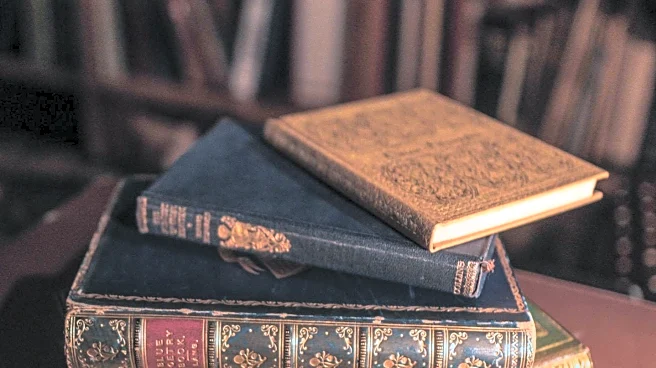
materials. The exhibition, organized by three club members over three years, highlights Austen's journey from relative obscurity to becoming a celebrated literary figure. The Grolier Club, founded in 1884, is renowned for its focus on rare books and manuscripts, offering free public exhibitions despite being a private members-only institution. The current exhibition is organized chronologically, showcasing items such as a first edition of 'Sense and Sensibility' and materials related to film adaptations of Austen's works.
Why It's Important?
This exhibition underscores the cultural and historical significance of Jane Austen's work, illustrating how her novels have influenced literature and popular culture over the centuries. By making such exhibitions accessible to the public, the Grolier Club plays a crucial role in preserving and promoting literary heritage. The exhibition also highlights the evolution of book production and distribution, reflecting broader changes in society and technology. For literary scholars, enthusiasts, and the general public, this exhibition offers a unique opportunity to engage with Austen's legacy and understand her impact on both historical and contemporary contexts.
What's Next?
The exhibition 'Paper Jane: 250 Years of Austen' will continue to be open to the public until February 14, providing ample opportunity for visitors to explore the collection. The Grolier Club plans to continue its tradition of hosting seven exhibitions annually, each drawing from its members' collections to offer insights into various literary and historical topics. Future exhibitions are likely to continue exploring the intersections between historical texts and contemporary culture, further cementing the club's role as a key institution in the literary world.
Beyond the Headlines
The Grolier Club's approach to making rare literary works accessible to the public raises important questions about the role of private institutions in cultural preservation. By offering free exhibitions, the club challenges the exclusivity often associated with private collections, promoting a more inclusive appreciation of literary history. This model could inspire other private institutions to adopt similar practices, potentially broadening public access to cultural and historical resources.