







What's Happening?
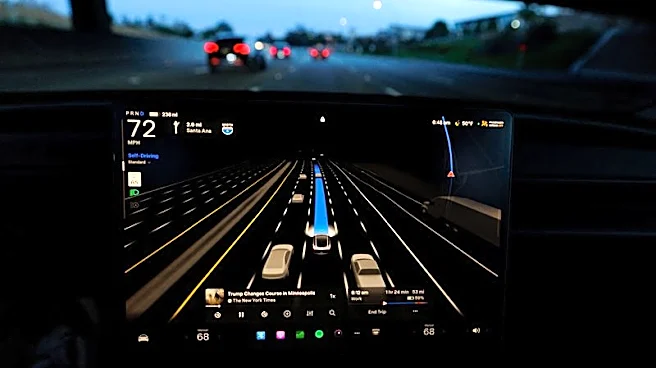
The Dutch vehicle authority, RDW, has granted European type approval for Tesla's full self-driving (FSD) supervised system, allowing its deployment within the Netherlands. This approval follows an extensive evaluation period of over 18 months, during
which the system was tested on both controlled tracks and public roads. The FSD supervised system is classified as an advanced driver assistance system, meaning the driver must remain actively engaged and responsible at all times. The system includes monitoring features that assess driver attention, such as sensors tracking eye movement and readiness to assume control. If the system detects insufficient attentiveness, it issues warnings and can temporarily deactivate. The approval is currently limited to the Netherlands, with potential for broader deployment across the European Union (EU) in the future.
Why It's Important?
This development is significant as it marks a step forward in the integration of advanced driver assistance systems in Europe, potentially influencing regulatory approaches in other regions. The approval highlights the differences in regulatory frameworks between the EU and the U.S., where the latter follows a self-certification model. The RDW's decision could pave the way for similar approvals for other manufacturers, such as BMW and Ford, which already have advanced driver assistance systems approved in various EU member states. The move could enhance road safety by supporting drivers in their tasks, provided the systems are used correctly. It also underscores the importance of continuous monitoring to ensure driver engagement, which is crucial for the safe operation of such systems.
What's Next?
For the FSD supervised system to be implemented EU-wide, RDW must submit a formal application to the European Commission. This would require a majority vote within the relevant committee before the system can be introduced across the bloc. The approval process will involve discussions among member states, considering the varying regulatory standards and software configurations across regions. The outcome could influence future regulatory policies and the adoption of similar technologies in other parts of the world.