


What's Happening?
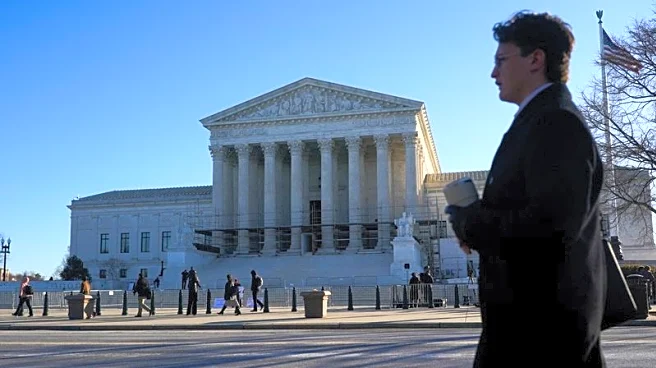
The U.S. Supreme Court recently ruled that President Trump lacked the authority to impose tariffs under a law intended for national emergencies. This decision is expected to lead to a surge in litigation at the U.S. Court of International Trade, where companies are seeking refunds for tariffs already imposed. Over 1,800 cases have been filed, challenging the legal basis for approximately $175 billion in U.S. customs revenue since last April. Major law firms like Crowell & Moring and Sidley Austin are actively involved, representing companies such as Costco and Revlon. The litigation process is anticipated to be lengthy, with President Trump predicting a five-year court battle. The Justice Department plans to contest any nationwide injunctive
relief, adding complexity to the refund process.
Why It's Important?
The Supreme Court's decision has significant implications for U.S. trade policy and the economy. Companies affected by the tariffs stand to recover substantial amounts, potentially impacting their financial health and operations. The ruling also challenges the executive branch's authority in trade matters, setting a precedent for future tariff impositions. The litigation could influence international trade relations, as companies seek to navigate the legal landscape to reclaim losses. The outcome may affect U.S. customs revenue and alter the dynamics of trade negotiations, impacting industries reliant on imports and exports.
What's Next?
As litigation unfolds, companies will continue filing cases at the Court of International Trade to preserve their right to refunds. The administration's response will be crucial, as it could either expedite or prolong the legal process. Stakeholders, including trade associations and industry groups, may lobby for regulatory changes to streamline tariff refund procedures. The court's decisions could set legal precedents affecting future tariff policies and international trade agreements. Companies involved in the litigation will closely monitor developments to adjust their strategies accordingly.