
What's Happening?
A new report by the environmental nonprofit Canopy highlights the potential of wheat straw as a sustainable alternative to wood-derived pulp in the production of fashion fibers. The report, titled 'From
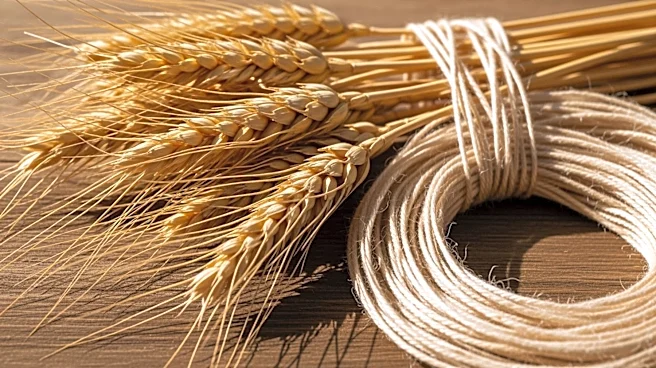
Wheat Straw to Wardrobes: Fashioning a New Fiber Future,' details a pilot project that tested the viability of using wheat straw to create viscose and lyocell fibers. The project, known as Project Latvus, was a collaborative effort involving various nonprofits, manufacturers, and brands, including H&M Group and Textile Genesis. Wheat straw was collected in India, processed in Finland, and then transformed into yarns in Germany and Portugal. The resulting fabrics were tested and found to be comparable in quality to traditional wood-pulp fibers, particularly for knit and sweater applications. Despite some challenges, such as lower pulp yields and production issues, the project demonstrated the commercial viability of wheat straw fibers.
Why It's Important?
The development of wheat straw as a fiber source is significant for the fashion industry, which traditionally relies on wood-derived pulp, contributing to deforestation. Annually, 300 million trees are cut down for this purpose, impacting climate-critical and biodiversity-rich forests. By using wheat straw, the industry can reduce its environmental footprint, supporting global biodiversity targets and reducing carbon emissions. Additionally, repurposing wheat straw helps mitigate the environmental impact of agricultural residue burning, a common practice in India that releases significant amounts of pollutants into the atmosphere. The success of Project Latvus suggests a shift towards more sustainable and circular textile production, potentially transforming the industry and reducing its reliance on forest resources.
What's Next?
Following the pilot's success, Canopy and its partners plan to conduct a techno-economic assessment to evaluate the financial viability of scaling up wheat straw-based lyocell production. The next steps include optimizing production processes and working with partners to increase production capacity. Educating consumers about the benefits of these new fibers will be crucial for widespread adoption. The project aims to develop clear claims that convey the environmental advantages of using agricultural residues for fiber production, empowering consumers to make informed choices and supporting the transition to a more sustainable textile industry.