





What's Happening?
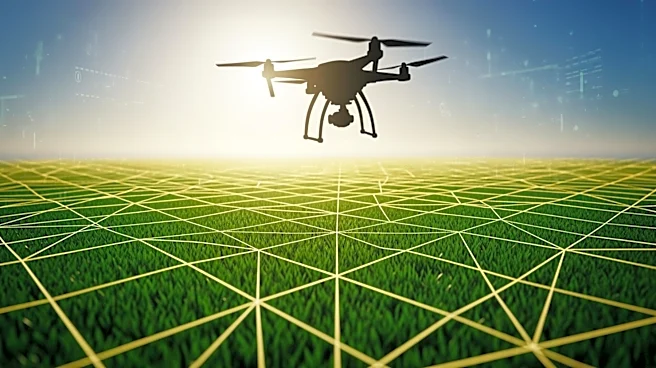
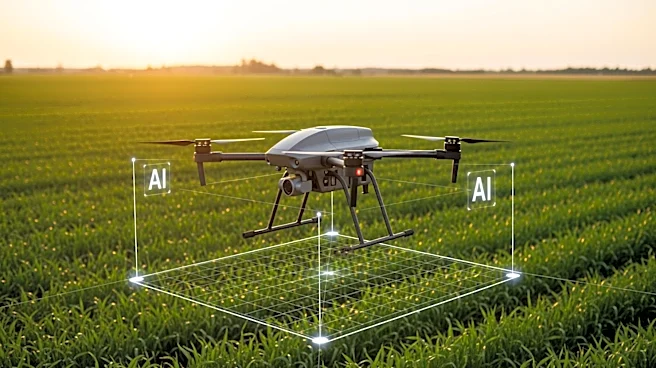
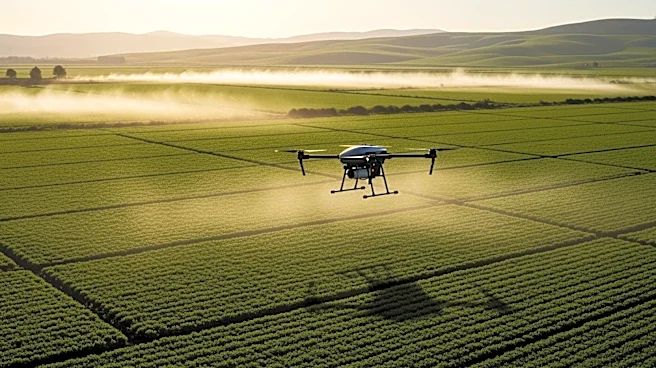
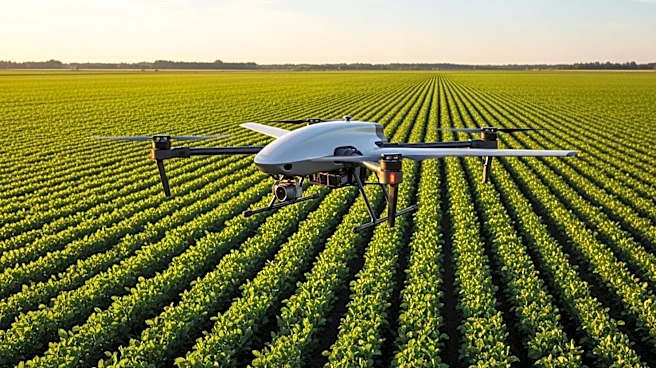
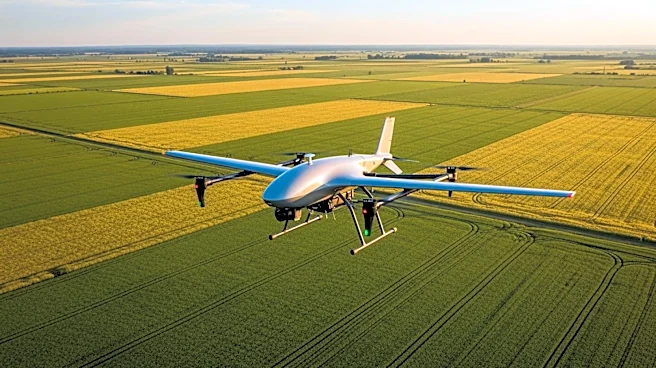
New Horizon Precision, a company based in East Tennessee, is transforming local agriculture by introducing drone technology to farms. These drones provide aerial applications of pesticides, herbicides, fertilizers, and seeds, along with mapping and field
analytics. The technology aims to improve efficiency and reduce the time and resources farmers spend in the field. Spencer Dore, a senior at the University of Tennessee and co-founder of the company, highlights the safety benefits of drones, which can operate over steep or uneven terrain, reducing the risk of tractor rollovers, a leading cause of farm fatalities in Tennessee. Farmers using the service report increased accuracy and reduced product usage, with drones capable of covering up to 70 acres per hour under ideal conditions.
Why It's Important?
The adoption of drone technology in agriculture represents a significant shift towards precision farming, which can lead to increased productivity and sustainability. By reducing the need for traditional equipment and minimizing product usage, drones offer a more environmentally friendly approach to farming. This technology is particularly beneficial in challenging conditions, such as wet or muddy fields, where traditional machinery may struggle. The efficiency and safety improvements provided by drones could lead to widespread adoption, potentially transforming agricultural practices across the U.S.
What's Next?
As New Horizon Precision enters its first full season of independent operation, interest from farmers is growing. The success of this technology could encourage further investment and development in agricultural drones, leading to more advanced features and capabilities. Additionally, the positive reception from farmers may prompt other agricultural companies to explore similar technologies, fostering innovation and competition in the industry.
Beyond the Headlines
The introduction of drones in agriculture raises questions about the future of traditional farming methods and the role of technology in rural communities. While drones offer numerous benefits, they also require technical expertise and investment, which may be challenging for smaller farms. The shift towards technology-driven farming could impact employment in the sector, necessitating retraining and education for workers. Furthermore, the reliance on drones and other technologies may alter the cultural landscape of farming, as traditional practices are replaced by modern innovations.