




What's Happening?
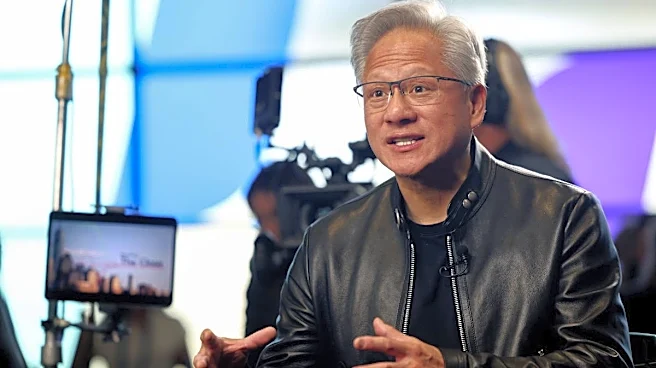
Nvidia CEO Jensen Huang has announced that the company's forecast for a $200 billion market for central processing units (CPUs) includes China. This statement comes amid ongoing technology tensions between the U.S. and China. Nvidia, known for its graphics
processing units (GPUs), is expanding its focus to CPUs, which are crucial for agentic AI systems that perform autonomous functions. Huang assured investors that Nvidia's growth will continue, supported by a broad customer base and new products. The company has received U.S. government licenses to sell its H200 chips to China, although Chinese approval is still pending. Nvidia's expansion into the CPU market is part of its strategy to achieve $1 trillion in sales for its AI chips.
Why It's Important?
Nvidia's inclusion of China in its CPU market forecast highlights the significant demand for advanced computing technology in the region, despite geopolitical tensions. The move underscores the importance of the Chinese market for global tech companies, as it represents a substantial portion of potential sales. Nvidia's strategy to diversify into CPUs reflects the growing demand for AI-driven technologies, which require powerful processing capabilities. This expansion could bolster Nvidia's position as a leader in the tech industry, potentially influencing market dynamics and competitive strategies. The outcome of U.S.-China negotiations and regulatory approvals will be crucial for Nvidia's ability to capitalize on this market opportunity.
What's Next?
Nvidia's future in the Chinese market will depend on the outcome of ongoing negotiations and regulatory approvals. The company's ability to sell its H200 chips in China could significantly impact its revenue and market share. Additionally, Nvidia's investment in Taiwan's supply chain and its collaboration with TSMC, a major chipmaker, will be critical in meeting the growing demand for AI technologies. As Nvidia ramps up production of its Vera Rubin platform, the company's performance in the second half of the year will be closely watched by investors and industry analysts. The broader implications of U.S.-China tech relations will also play a role in shaping Nvidia's strategic decisions.